
The sync layer between ocean and land.
OceanLand Sync System is an open-source AGPL 3.0+ communication and stabilization platform designed for vehicles that operate across both land and water. It focuses on maintaining continuous satellite connectivity in environments where motion, wave dynamics, and rapid transitions between terrain types would normally disrupt traditional communication systems. The project combines hardware stabilization, real-time control systems, and adaptive networking into a single coordinated stack.
At its core, the system uses a biologically inspired “pigeon-head” stabilization model for its antenna platform. A 3-axis gimbal system continuously compensates for roll, pitch, and yaw caused by vehicle movement, keeping the satellite antenna precisely aligned with overhead satellites. This allows the system to maintain stable signal lock even under heavy motion conditions typical of marine environments.
On the networking side, OceanLand Sync System abstracts multiple satellite providers into a unified communication layer. It can dynamically switch between high-bandwidth and low-latency networks, including systems like SpaceX Starlink and Iridium Communications Inc., ensuring resilience even when one network becomes degraded or unavailable. A built-in failover engine and store-and-forward buffer system prevent data loss during temporary outages.
The platform also includes a motion-aware intelligence layer that processes IMU and GNSS sensor data to predict movement patterns and adjust antenna positioning proactively. This predictive stabilization reduces signal loss before it occurs rather than reacting after disruption. Combined with secure communication tunnels, API access, and modular system design, OceanLand Sync System provides a full-stack foundation for resilient connectivity in amphibious and extreme mobility environments.
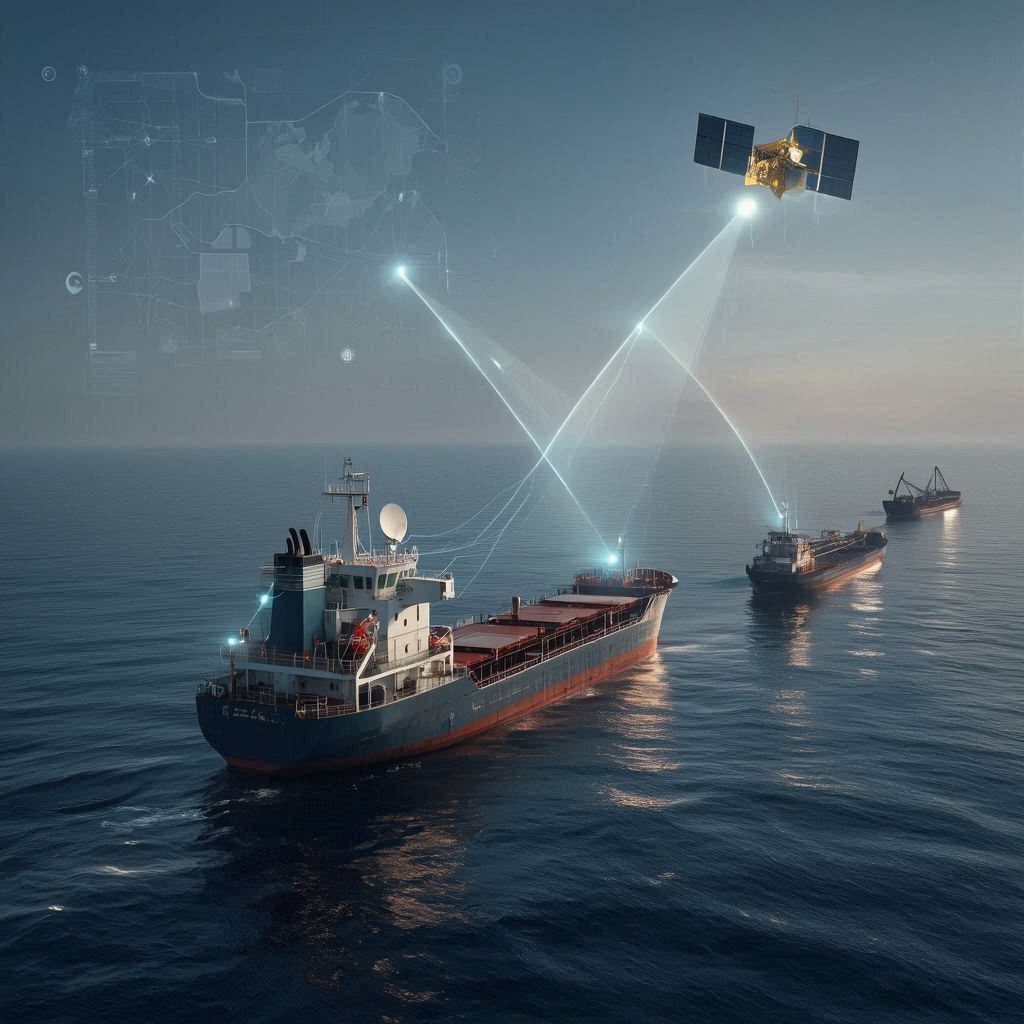
- OceanLand Sync System — An open-source AGPL 3.0+ platform that provides stabilized satellite connectivity for amphibious vehicles across land and water using predictive motion control and multi-orbit network switching.