
The science of software driving the automotive industry sits at the intersection of real-time systems engineering, artificial intelligence, safety-critical design, and distributed computing. Modern vehicles are no longer purely mechanical systems; they are software-defined platforms where everything from braking and steering assistance to energy management and navigation is coordinated through complex codebases. This shift has pushed automotive software into a cutting-edge domain where reliability, latency, and fault tolerance are as important as innovation and performance.
A major driver of this evolution is the growing influence of open-source ecosystems. Automotive software stacks increasingly rely on open frameworks, shared tooling, and collaboratively developed standards that allow manufacturers and suppliers to build interoperable systems. Open-source contributions accelerate innovation in areas like autonomous driving perception, sensor fusion, simulation environments, and in-vehicle operating systems. This collaborative model helps distribute the immense complexity of modern automotive software while also enabling faster security auditing and broader peer review.
At the same time, safety-critical design remains central, which is where human-in-the-loop (HITL) protocols play a crucial role. Even as advanced driver-assistance systems and automated driving features become more capable, human oversight is still embedded into development, validation, and operational feedback loops. Engineers use HITL systems in simulation testing, real-world edge-case evaluation, and continuous improvement pipelines to ensure that automated decisions align with human expectations and safety requirements. This layered approach ensures that humans remain integral to decision validation, especially in uncertain or high-risk scenarios.
Vehicle safety procedures are also evolving alongside these software systems, becoming more data-driven and adaptive. Modern safety engineering incorporates formal verification methods, redundancy architectures, real-time diagnostics, and over-the-air updates that allow manufacturers to patch vulnerabilities and improve system behavior after deployment. Together, open-source collaboration, HITL validation, and rigorous safety protocols form a tightly integrated framework that defines the cutting edge of automotive software science today.
Automotive projects created by Roxanne Ardary:

AIChauffeur – AI driving efficiency coach for vehicles, providing real-time coaching and predictive energy optimization. AGPLv3

DashHub — An open source, AGPL-3.0+ universal automotive dashboard platform that retrofits any vehicle into a modular, connected, and future-ready smart system.
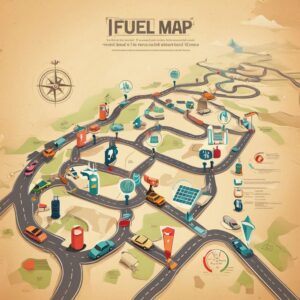
FuelAI — An open-source platform that uses AI to find the cheapest way to power your journey by comparing real-time energy prices and optimizing routes.
PathAI – Fleet management platform automating compliance, GPS tracking, and predictive maintenance reporting. AGPLv3
Project SynthesisMotion — An open-source adaptive motion intelligence framework that unifies real-time vehicle identity modeling, physics-informed control, and safety-verified autonomous systems. AGPLv3
PulseDrive — An open-source, AI-assisted driver safety system that verifies sobriety and continuously monitors driver identity and attention using edge AI and breath-based authentication.
RegenMatrix – AI-controlled regenerative energy system for vehicles optimizing energy recovery and efficiency. AGPLv3
TerraRoam – An AI-powered, vehicle-aware open-source travel intelligence platform for safe routing, camping discovery, and real-time trip planning. AGPLv3
TruthVIN – An open-source, transparent vehicle valuation system that replaces opaque pricing guides with real market data and verifiable algorithms. AGPLv3
Vehicle Overlay System (VOS) — A universal retrofit platform that adds secure AI, connectivity, and edge computing capabilities to any vehicle without modifying safety-critical systems. AGPLv3