
Circular Infrastructure, Rewarded
TokenCycle 2.0 is an open-source circular infrastructure platform designed to help cities and communities move away from linear waste systems and toward fully integrated material, energy, and data loops. Instead of treating waste as an endpoint, TokenCycle redefines it as a continuous resource stream that can be tracked, processed, and reintroduced into the economy through recycling, composting, and energy recovery systems. The platform is built to support modular deployment, meaning a small town can start with basic collection and composting while larger cities can scale into advanced waste-to-energy networks and digital material marketplaces.
At its core, TokenCycle 2.0 connects physical infrastructure with digital intelligence. Smart bins equipped with IoT sensors provide real-time data on waste levels and composition, while AI systems optimize collection routes and identify contamination before processing. Recycling facilities and composting hubs are integrated into a unified system that tracks material flow from origin to final output. Energy recovery modules such as biogas digesters and waste-to-energy units feed into local microgrids, helping communities generate usable electricity and heat from materials that would otherwise be discarded.
A defining feature of TokenCycle 2.0 is its blockchain-based material ledger and token economy. Every meaningful action in the system—from recycling correctly to reducing waste contamination—can be tracked and rewarded through a token system that incentivizes sustainable behavior. These tokens can represent environmental impact credits, participation rewards, or even exchange value within local circular marketplaces for recovered materials and services. This creates a feedback loop where environmental responsibility becomes economically visible and socially reinforced.
The platform also includes advanced simulation and resilience features. Digital twin models allow cities to simulate waste flows, energy demand, and resource recovery before deploying physical infrastructure. Disaster adaptation modules ensure that waste systems can remain operational or rapidly redeploy during emergencies such as floods, storms, or grid failures. Combined with community engagement tools like dashboards, sustainability scoring, and educational interfaces, TokenCycle 2.0 is designed not just as infrastructure software, but as a living civic system that evolves with the community it serves.
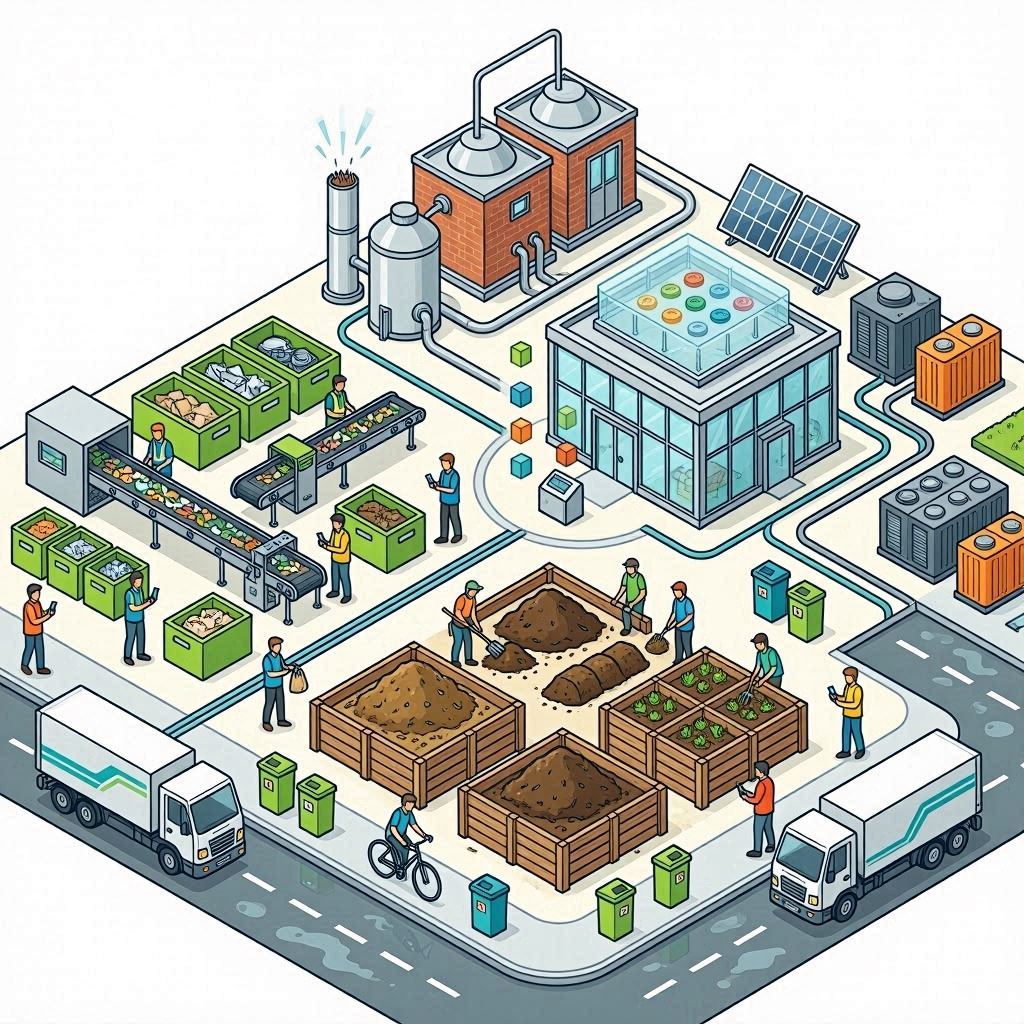
- TokenCycle 2.0 — An open-source circular infrastructure platform that transforms urban waste systems into integrated networks for recycling, composting, energy recovery, and tokenized community rewards.