
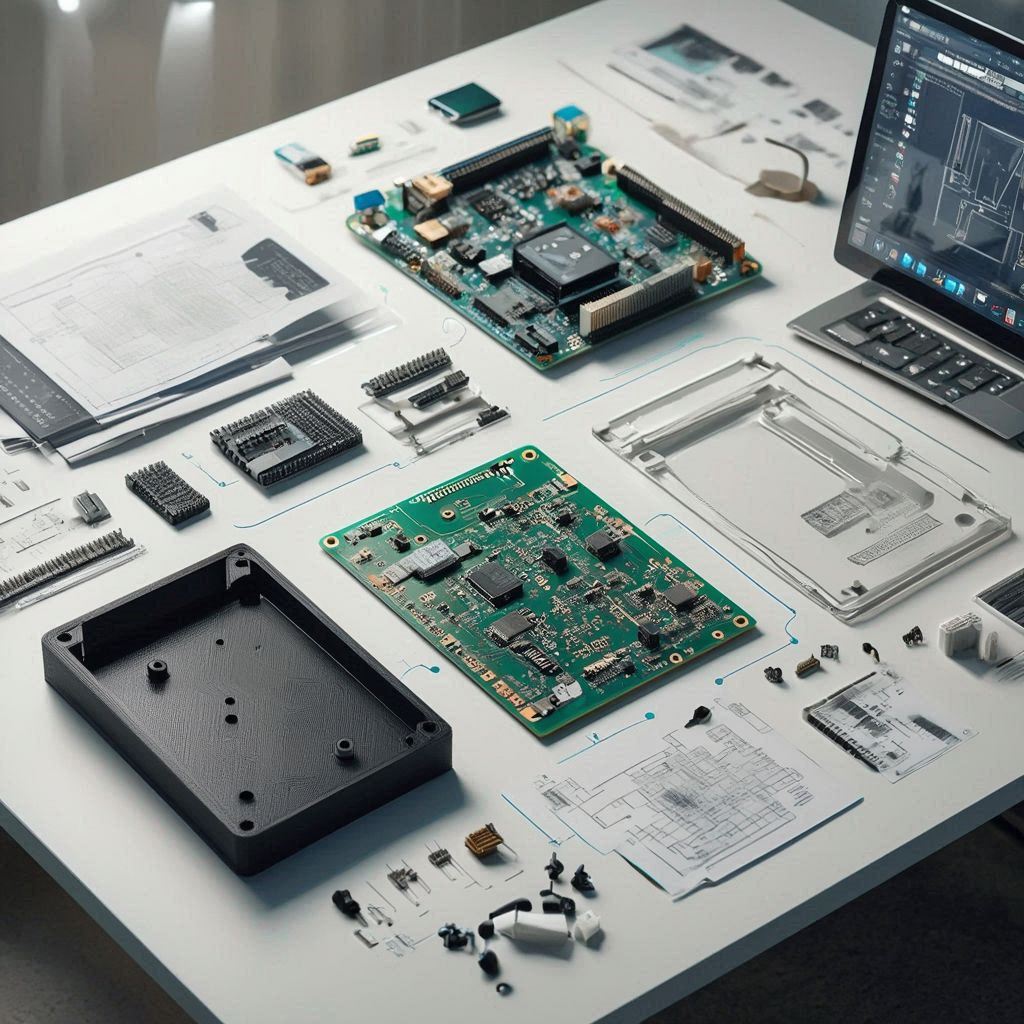
The future of AI is increasingly defined by modular architecture, systems built from interoperable components that can function independently or plug seamlessly into larger ecosystems. Instead of monolithic models, developers are moving toward flexible building blocks: specialized models for language, vision, reasoning, and domain-specific tasks that can be combined, replaced, or upgraded without rebuilding entire systems. This approach allows AI to scale across environments, from personal devices to enterprise data centers, while maintaining efficiency and adaptability. A small business might deploy only the modules it needs, while a global network could orchestrate thousands of components working in parallel, each optimized for a distinct function.
As this modular ecosystem matures, AI will become deeply personal and widely distributed. Individuals will run custom-tailored models aligned with their workflows, values, and preferences, while businesses and governments will maintain their own secure, domain-specific AI infrastructures. Yet beneath this expansion lies a foundational truth: “Big Data” and modern AI are built on the cumulative efforts of countless innovators, developers, and contributors. Preserving acknowledgment and attribution for each contribution is not just a technical necessity, it is a cultural one. Recognition ensures transparency, fosters trust, and reinforces the human element within an increasingly automated world, anchoring progress in a system that values every participant rather than obscuring them behind the scale of the machine.
All specifications are released under the GNU Affero General Public License v3.0 or later (AGPL-3.0+) and are available for free use, provided the attribution requirements under Section 7 of the license are maintained. Organizations that require attribution-free deployment may obtain a Specification Branding License. Licensing fees are determined based on the specification category, the intended deployment scope, and the size of the network or environment in which the specification is implemented.
The Open Arsenal specifications are designed as foundations, not disposable products. They define reusable architectures that can be implemented, extended, combined, modified, and adapted to changing technologies and real-world requirements. Modular design allows individual capabilities to evolve without forcing an entire system to be replaced, while vendor-neutral architecture helps preserve independence and interoperability.
Long-term infrastructure requires long-term thinking. Open-source licensing encourages examination, reuse, modification, and collaboration, while perpetual commercial licensing can provide organizations with lasting rights to deploy a specification without making foundational infrastructure dependent on recurring licensing renewals. The objective is to create technological foundations that can remain useful as companies, technologies, platforms, and business models change.
The category index of Open Source specifications created by Roxanne Ardary:

















Specification Baskets
Bundles organized by Industry
- Aerospace
- Agriculture
- Cybersecurity
- Deterministic Financing
- Energy
- Health
- Intellectual Property
- Legal
- Psychology
- Real Estate
- Scientific Discovery
Special Service Specification Baskets
Bundles organized by Sector
AI Specification Component Index
The AI Specification Component Bundles are collections of open specifications organized around core artificial intelligence components, such as agents, reasoning, memory, knowledge retrieval, and governance. Each bundle provides a structured framework for designing interoperable, modular, and standards-based AI systems that can be implemented independently or combined into larger architectures.
- Agents
- AI Agent Framework
- Analytics
- Benchmarking
- Edge AI
- Embeddings
- Evaluation
- Federated
- Fine-Tuning
- Generative AI
- Governance
- Inference
- Large Language Models
- Machine Learning
- Memory
- Multi-Agent Systems
- Multimodal
- Orchestration
- Personalization
- Policy Relationship Analysis
- Prompting
- Provenance
- Reasoning
- Recommendations
- Retrieval
- Safety
- Search
- Semantic
- Training
- Vector
- Search
- Workflows
Pipelines