
The Internet of Things is steadily transforming from a patchwork of proprietary ecosystems into something far more unified and collaborative, driven by the rise of open source software. As more devices, from household appliances to industrial systems, become interconnected, open frameworks allow developers across the world to contribute improvements, identify vulnerabilities, and adapt systems to real-world needs at a pace no single company could match. This shift lowers barriers to entry, enabling individuals, startups, and public institutions to build and customize IoT solutions without being locked into closed platforms.
What follows naturally is the emergence of open source hardware alongside the software layer. Schematics, component designs, and manufacturing processes are increasingly shared, allowing anyone with the tools, whether a local workshop or an advanced fabrication lab, to build, modify, and deploy their own connected devices. This decentralization strengthens resilience: supply chains diversify, innovation becomes localized, and communities gain more control over the technologies they rely on. It also reinforces privacy and security, as transparent designs can be audited, tested, and improved continuously by a global network of contributors rather than hidden behind corporate walls.
As collective participation expands, progress accelerates in ways that compound over time. Each contribution, whether a line of code, a circuit improvement, or a security patch, builds on previous work, creating a living ecosystem of shared intelligence. This collaborative momentum empowers individuals, businesses, and governments alike to innovate more rapidly and responsibly. Instead of reinventing the wheel, they can focus on meaningful advancements, leveraging a foundation shaped by billions of minds working in parallel.
The result is a trajectory of human advancement that begins to resemble what once lived only in imagination. Systems become more adaptive, cities more responsive, and technologies more aligned with human needs and values. When knowledge is openly shared and continuously refined, the ceiling for innovation rises dramatically. What emerges is not just a smarter network of devices, but a more connected and capable global society, one where the collective effort of humanity drives breakthroughs that were once confined to the realm of fairytales.
All specifications are released under the GNU Affero General Public License v3.0 or later (AGPL-3.0+) and are available for free use, provided the attribution requirements under Section 7 of the license are maintained. Organizations that require attribution-free deployment may obtain a Specification Branding License. Licensing fees are determined based on the specification category, the intended deployment scope, and the size of the network or environment in which the specification is implemented.
The Open Arsenal specifications are designed as foundations, not disposable products. They define reusable architectures that can be implemented, extended, combined, modified, and adapted to changing technologies and real-world requirements. Modular design allows individual capabilities to evolve without forcing an entire system to be replaced, while vendor-neutral architecture helps preserve independence and interoperability.
Long-term infrastructure requires long-term thinking. Open-source licensing encourages examination, reuse, modification, and collaboration, while perpetual commercial licensing can provide organizations with lasting rights to deploy a specification without making foundational infrastructure dependent on recurring licensing renewals. The objective is to create technological foundations that can remain useful as companies, technologies, platforms, and business models change.
IoT specifications created by Roxanne Ardary:

- AeroGrid – An open source, modular AI-powered weather drone platform designed for autonomous atmospheric monitoring, real-time weather data collection, and advanced forecasting through distributed intelligence.

- Agility Copilot – A modular, rule-based agility course design system that enables intelligent, space-aware course creation, validation, and optimization across multiple federation standards.

- AppNest – A cheerful cross-platform open-source app marketplace where developers publish software and users discover, compare, and download trusted apps in one welcoming hub.

- AstraForge – An open-source mission control and orchestration platform designed to manage complex systems, workflows, and autonomous operations.

- Aurea – AI-powered IaC security platform scanning Terraform, Kubernetes, Docker, and Ansible for vulnerabilities and misconfigurations. AGPLv3

- AxonBot – Robotics and IoT platform connecting, automating, and monitoring devices with predictive automation and modular extensibility. AGPLv3

- Brightbound – An open-source AI creative engine that turns prompts into printable ink coloring pages, themed books, and flipbook-style animations with modular generation and export systems.

- CIRRUS GRID – A modular atmospheric intelligence network that enables persistent, self-healing connectivity and distributed compute across ground, airborne swarm, and stratospheric layers.

- Civic – An AI-powered hyperlocal community platform that connects residents, businesses, and organizations within town-based digital spaces featuring mini blogs, local directories, events, and intelligent community assistance.

- CommandQuest – An open-source, fully extensible CLI that combines automation, AI-assisted workflows, and gamification to help users master their terminal experience.

- CommonsHome – An open-source AI-powered platform for home staging, spatial intelligence, and real estate marketing optimization that helps transform property photos into market-ready listings through modular analytics, virtual staging, and performance-driven insights.

- DataLyra – An open-source, self-hosted, end-to-end encrypted AI data platform that transforms natural language into secure, insightful analytics while keeping all data under user control.

- DocRewrite – AI tool for searching and rewriting documents/websites according to custom rules with automation and enterprise-ready features. AGPLv3

- Ecliptic – A decentralized, encrypted, and self-healing web infrastructure system that distributes hosting across a global peer-to-peer network instead of centralized servers.

- EmailXpose – An open source AI-powered email security system that detects phishing, spam, scams, malware, and hidden symbolic intent across text, images, and video to provide clear, explainable inbox protection. AGPLv3

- ExoAtmos – An open source specification for modeling, simulating, and researching atmospheric systems, weather formation, atmospheric engineering, and planetary atmosphere development

- FailureMap – An open-source AI venture intelligence platform that analyzes startups through a risk-first, evidence-based system to identify structural weaknesses and potential failure points.

- FederAI – An open-source, ultra-efficient federated AI framework enabling distributed intelligence across everyday devices.

- FederNet – An open-source, secure, and decentralized networking framework enabling seamless, end-to-end encrypted communication between apps across devices.

- FlexNode – Multi-backend storage virtualization API for edge and IoT devices supporting automation and observability. AGPLv3

- Fluxara – A physics-native intelligence system for modeling, simulating, validating, and optimizing energy and motion systems.

- ForwardState – Predictive cryogenic control software enabling stable, autonomous in-space propellant transfer.

- GuardianNX – A modular, AGPL-3.0+ open source home security operating system designed to eliminate vendor lock-in through fully replaceable hardware, encrypted edge AI surveillance, and decentralized, privacy-first system architecture.

- HelixPlan – An open-source spatial intelligence system that reconstructs accurate architectural floorplans from walkthrough video and minimal dimensional inputs.

- IndustriVerse – AI-powered platform mapping, analyzing, and optimizing the U.S. industrial infrastructure from ore deposits to manufacturing. AGPLv3

- IntelligenceForge – A Training Orchestration Specification for coordinating AI model development, training workflows, compute resources, datasets, evaluation systems, governance, and model lifecycle management.

- KeyframeAI – An open-source, AI-powered design platform with fully editable layers, real-time collaboration, and end-to-end encrypted user content.

- Lexora – An open-source AI-powered repository intelligence platform that helps you understand any codebase before you build.

- LibreOrbit – An open-source, modular satellite networking operating system designed to connect satellites, ground stations, sensors, and communities through open and interoperable space infrastructure.

- License Guardian Network – A modular semantic licensing, provenance, and compliance platform that verifies specification attribution, detects semantic reuse, and supports AGPL-3.0+ and Specification Branding License (SBL) enforcement workflows.

- LightQuest – A real-world adventure game where players explore beneath the surface, battle Shadow figures, discover rare loot, and embark on cooperative quests.
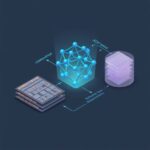
- LotusGraph – Hybrid AI-ready graph database with Rust core, Python API, real-time streaming, GNN support, and edge/IoT deployment. AGPLv3

- MarketLight – An open-source, transparent global marketplace where innovation is protected, verified, and ultimately shared under AGPL-3.0+ for the benefit of everyone.

- MedFair – An AI-powered medical financial rights and debt optimization system that verifies medical bills, identifies legal protections and financial assistance, challenges billing errors, and finds the fairest repayment options.

- MediNetAI – AI platform for medical/dental image analysis with multi-modal disease detection, predictive modeling, and patient engagement. AGPLv3

- MetaBridge – An open-source, ontology-driven data integration platform that enables secure multi-party data sharing through governed schema evolution, validated ETL pipelines, and strong spec hygiene enforcement.

- MetaSpec – A fully local, encrypted, AI-assisted specification engine designed to transform a single idea into an evolving ecosystem of applications, platforms, and modular systems.

- MindCache – An open-source persistent multi-agent memory platform designed for long-term state management, snippet retrieval, versioned memory, and collaborative AI intelligence.

- ModelSignature – An open specification for AI model registry and lifecycle management that provides a permanent record of every model through identity, provenance, versioning, governance, and deployment tracking.

- NextState – AI platform empowering citizens to track and optimize dividends from state-owned resources. AGPLv3

- NodeHR – An open-source, self-hosted HR concierge and workflow automation platform that uses AI to turn employee questions and HR processes into secure, policy-aware, and fully auditable workflows.

- Nullify – Open source centralized data retention and deletion system with secure, policy-driven automation and full auditability. AGPLv3

- OceanLand Sync System – An open-source AGPL 3.0+ platform that provides stabilized satellite connectivity for amphibious vehicles across land and water using predictive motion control and multi-orbit network switching.

- OpenHydrology – An open-source modular water infrastructure platform designed to provide transparent, repairable, and scalable water purification through selective electro-separation, intelligent automation, and community-driven innovation.

- OpenReplica – An open-source tool that lets users instantly replicate, clean, and export websites into fully portable, self-owned projects without subscription lock-in or proprietary restrictions.

- OrganicWorks – An open source specification for modeling organic resource recovery businesses from feedstock collection and processing through product development, market pricing, sales, profitability, and scalable growth.

- PhaseLock – A cryogenic conditioning loop system enabling stable, vapor-free propellant transfer for reusable in-space refueling.

- Power Transparency Network – An AGPL 3.0+ open-source intelligence platform that analyzes energy production, market concentration, infrastructure ownership, and household energy dependency to promote transparency against energy monopolies.

- PredictaFlux – A modular AGPL 3.0+ energy intelligence platform that transforms triboelectric micro-energy signals into predictive, optimized, and distributed energy system intelligence.

- ProjectFoundry – Where AI starts the project by transforming ideas into structured, human-approved open-source repositories with automated documentation, licensing, and collaboration-ready scaffolding.

- ProofLayer – An open-source continuous SOC 2 and SOC 3 compliance infrastructure designed to provide automated evidence collection, transparency dashboards, and machine-readable trust verification through the
.well-known/compliancestandard.

- PropIntel – An open-source, AI-driven property intelligence platform that tracks ownership, notices of default, liens, foreclosures, and title history across the United States. AGPLv3

- QuantumLingua – High-speed AI translation platform supporting text, audio, images, and video with privacy-first design. AGPLv3

- Quantum Synapse – An open-source, non-invasive brain–computer interface platform that enables mind-controlled interaction through wearable EEG technology and real-time neural signal processing.

- ResponseOS – An open-source platform for reproducible clinical research analysis that uses Bayesian modeling, meta-analysis, and normalized clinical trial data to evaluate treatment effectiveness and placebo-controlled outcomes.

- Rulea – An open-source AI compliance layer that provides real-time Terms of Service guidance, helping users understand conflicts, receive recommendations, and comply without bans or suspensions.

- SecurePath – Enterprise-grade AI evaluation and regulatory compliance framework with audit-ready logs and dashboards. AGPLv3

- SelfRoot – An open-source deterministic identity infrastructure system that enables passwordless authentication by converting live human presence into cryptographic proof without storing biometric data or relying on centralized identity providers. AGPLv3

- ServiceLens – An open-source local services platform that helps independent contractors become discoverable through natural-language search while providing secure payments, invoicing, and tax-compliant reporting.

- SignalParcel – An open-source system that maps land ownership, operators, and licensing relationships using verified public records.

- SmartSmile – AI platform helping U.S. patients compare dental pricing, verify specials, detect upsells, and find trustworthy care. AGPLv3

- SolderSense – An open-source, privacy-first programmable mouse that delivers fully auditable, deterministic input control with customizable macros, local-only intelligence, and no telemetry or cloud dependency.

- Sovereign – An AI specification for transforming dependent systems into independent, portable, federated alternatives that prioritize autonomy, economic participation, user ownership, reproducibility, and freedom from vendor lock-in.

- SpecFreedom – A specification which enables technology independence through universal specification interoperability, allowing proprietary and incompatible systems to be adapted, connected, replaced, and implemented using open, cost-effective technologies.

- SteadyMission – An open-source AI simulation and mission-alignment platform that helps organizations achieve strategic goals without compromising their values, ethics, or long-term direction.

- Taskivo – AI-powered task coordination and service standardization platform that turns real-world requests into structured, comparable, and actionable outcomes.

- TerraGuild AI – A modular AI specification for designing regenerative food forests, permaculture landscapes, and intelligent ecological systems through generative design, botanical intelligence, and ecosystem modeling.

- TimeFabric – An open-source, voice-enabled scheduling and time orchestration platform that combines intelligent scheduling, weather-aware planning, and cross-device synchronization into a single modular system.

- VeritasVote – Open-source, tamper-evident in-person voting machine with auditable, verifiable, paper-backed votes. AGPLv3

- VoteInsight – An open-source civic platform that helps the public analyze election data, verify results, and understand voting trends through transparent community-driven tools.

- VoxPersona – A source-bound AI persona platform that delivers verified, citation-backed responses in text, voice, or AI-generated video.
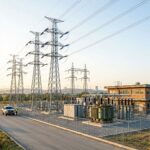
- WattMind – A distributed energy exchange system that coordinates decentralized energy production, storage, and consumption through a real-time, intelligent mesh-based market.

- Xythera – Machine-Assisted Engineering, Fully Open: a modular AI platform for sensor intelligence, open hardware design generation, visualization, and step-by-step build instruction systems with full provenance tracking.
A Specification Branding License can be purchased for the basket of Internet of Things Specs
Purchasing a Specification Basket grants the purchaser a perpetual license for attribution-free use of every existing specification included within that category, as well as any additional specifications subsequently added to the category.
Specification Basket Pricing:
| Network Size | # of Users | One-Time Price | Duration |
| Small | 1 – 20 | Custom Quote | Perpetual License |
| Medium | 21- 1000 | Custom Quote | Perpetual License |
| Large | 1001 + | Custom Quote | Custom Quote |
