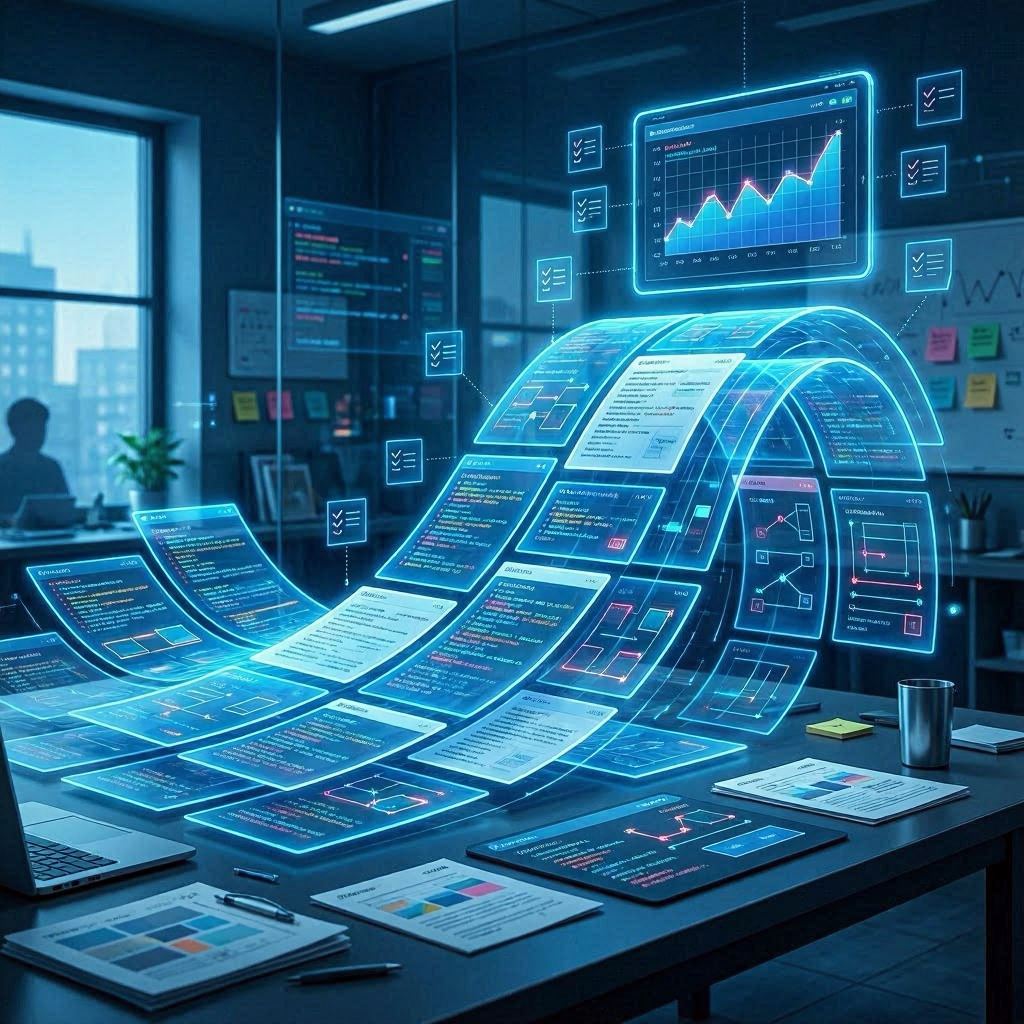
The Perpetual Licensing section explains why long-term technology requires licensing models that provide lasting rights rather than ongoing dependency on recurring renewals. It highlights how perpetual licenses can give organizations greater certainty when investing in infrastructure that may need to operate and evolve for many years. This approach supports continuity, long-term planning, and the preservation of technology as systems, vendors, and business models change.
A perpetual license grants the licensed rights for an indefinite period rather than requiring the license to be renewed annually.
Infrastructure is expected to operate for years or decades. Organizations need confidence that their right to use a foundational design will not simply expire because a subscription ends.
A specification can influence architecture, software, hardware, processes, and infrastructure for many years. A perpetual license provides long-term certainty around that foundation.
No. Perpetual licensing concerns the duration of the granted rights. The underlying specification and its implementations can continue evolving.
It can provide greater licensing certainty because the organization does not have to repeatedly renegotiate continued use of the licensed rights.
A subscription typically grants access or rights for a recurring period. A perpetual license is intended to provide continuing rights under the terms of the license.
If critical infrastructure depends on recurring payments, a discontinued subscription can create uncertainty around continued operation, budgeting, migration, and long-term ownership.
Yes. Long-term licensing can make it easier for an organization to preserve systems across leadership changes, technology transitions, acquisitions, and other organizational changes.
Infrastructure can outlive the companies, products, technologies, and business models that originally surrounded it. Long-term licensing helps preserve the ability to continue using the underlying design.
It can be. By establishing continuing rights to use a foundational specification, perpetual licensing can contribute to long-term preservation and independence.
The Open Arsenal specifications are designed as foundations, not disposable products. They define reusable architectures that can be implemented, extended, combined, modified, and adapted to changing technologies and real-world requirements. Modular design allows individual capabilities to evolve without forcing an entire system to be replaced, while vendor-neutral architecture helps preserve independence and interoperability.
Long-term infrastructure requires long-term thinking. Open-source licensing encourages examination, reuse, modification, and collaboration, while perpetual commercial licensing can provide organizations with lasting rights to deploy a specification without making foundational infrastructure dependent on recurring licensing renewals. The objective is to create technological foundations that can remain useful as companies, technologies, platforms, and business models change.