
The science of software driving the automotive industry sits at the intersection of real-time systems engineering, artificial intelligence, safety-critical design, and distributed computing. Modern vehicles are no longer purely mechanical systems; they are software-defined platforms where everything from braking and steering assistance to energy management and navigation is coordinated through complex codebases. This shift has pushed automotive software into a cutting-edge domain where reliability, latency, and fault tolerance are as important as innovation and performance.
A major driver of this evolution is the growing influence of open-source ecosystems. Automotive software stacks increasingly rely on open frameworks, shared tooling, and collaboratively developed standards that allow manufacturers and suppliers to build interoperable systems. Open-source contributions accelerate innovation in areas like autonomous driving perception, sensor fusion, simulation environments, and in-vehicle operating systems. This collaborative model helps distribute the immense complexity of modern automotive software while also enabling faster security auditing and broader peer review.
At the same time, safety-critical design remains central, which is where human-in-the-loop (HITL) protocols play a crucial role. Even as advanced driver-assistance systems and automated driving features become more capable, human oversight is still embedded into development, validation, and operational feedback loops. Engineers use HITL systems in simulation testing, real-world edge-case evaluation, and continuous improvement pipelines to ensure that automated decisions align with human expectations and safety requirements. This layered approach ensures that humans remain integral to decision validation, especially in uncertain or high-risk scenarios.
Vehicle safety procedures are also evolving alongside these software systems, becoming more data-driven and adaptive. Modern safety engineering incorporates formal verification methods, redundancy architectures, real-time diagnostics, and over-the-air updates that allow manufacturers to patch vulnerabilities and improve system behavior after deployment. Together, open-source collaboration, HITL validation, and rigorous safety protocols form a tightly integrated framework that defines the cutting edge of automotive software science today.
All specifications are released under the GNU Affero General Public License v3.0 or later (AGPL-3.0+) and are available for free use, provided the attribution requirements under Section 7 of the license are maintained. Organizations that require attribution-free deployment may obtain a Specification Branding License. Licensing fees are determined based on the specification category, the intended deployment scope, and the size of the network or environment in which the specification is implemented.
The Open Arsenal specifications are designed as foundations, not disposable products. They define reusable architectures that can be implemented, extended, combined, modified, and adapted to changing technologies and real-world requirements. Modular design allows individual capabilities to evolve without forcing an entire system to be replaced, while vendor-neutral architecture helps preserve independence and interoperability.
Long-term infrastructure requires long-term thinking. Open-source licensing encourages examination, reuse, modification, and collaboration, while perpetual commercial licensing can provide organizations with lasting rights to deploy a specification without making foundational infrastructure dependent on recurring licensing renewals. The objective is to create technological foundations that can remain useful as companies, technologies, platforms, and business models change.
Automotive specifications created by Roxanne Ardary:

- AIChauffeur – AI driving efficiency coach for vehicles, providing real-time coaching and predictive energy optimization. AGPLv3

- Crosswater – An open-source autonomous amphibious vehicle platform designed to operate across both land and water using electric propulsion, modular hardware, and an open autonomy stack.

- DashHub – An open source, AGPL-3.0+ universal automotive dashboard platform that retrofits any vehicle into a modular, connected, and future-ready smart system.

- DrivePass – An open-source, privacy-first vehicle access platform that replaces traditional key fobs with encrypted, identity-based authentication and secure retrofit-friendly remote start control.

- FluxGrid Infrastructure – An open-source wireless EV charging and intelligent grid system designed to enable autonomous, cable-free vehicle charging with integrated safety, thermal, and energy management layers.

- FluxCore Mobility – A modular, encrypted edge AI vehicle intelligence system built for consent-bound, privacy-first autonomous and assisted driving.

- FuelAI – An open-source platform that uses AI to find the cheapest way to power your journey by comparing real-time energy prices and optimizing routes.

- LumenAudio – A modular AI-driven audio mesh for modern vehicles that unifies streaming services, open-source media, and local sources into a single voice-controlled, context-aware infotainment system.

- Odessa Drive – Open-source intelligence for the road: an AI-powered system that voice-tracks mileage, fuel, and repairs while maintaining IRS-compliant, audit-ready records.

- Open Aerial Autonomous Safety System (OAASS) – A modular open-source autonomous mobility safety platform that combines multi-sensor perception, predictive collision avoidance, and emergency aerial escape systems for next-generation ground-to-air vehicle safety.

- Orbital Drive — an open-source regenerative energy framework for electric vehicles that explores coordinated energy recovery from motion, airflow, braking, heat, and solar input.

- PatentCortex – The brain behind engineered systems, transforming complex patents into structured, searchable engineering intelligence.

- PathAI – An AI-powered fleet compliance platform that automatically tracks GPS data to generate real-time compliance reports, optimize routes, and improve logistics safety and efficiency.

- PathCore AI – An open-source, voice-driven navigation intelligence system that delivers conversational, privacy-first, predictive routing and integrates with any smart vehicle AI platform.

- Project SynthesisMotion – An open-source adaptive motion intelligence framework that unifies real-time vehicle identity modeling, physics-informed control, and safety-verified autonomous systems. AGPLv3

- PulseDrive – An open-source, AI-assisted driver safety system that verifies sobriety and continuously monitors driver identity and attention using edge AI and breath-based authentication.

- RegenMatrix – AI-controlled regenerative energy system for vehicles optimizing energy recovery and efficiency. AGPLv3
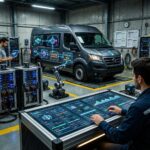
- RoadSage – An open-source AI vehicle intelligence system that monitors real-time mechanical behavior to predict failures and enable proactive, data-driven maintenance.
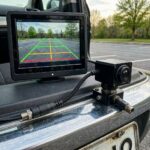
- StoneBack – An open-source, repairable rear-vision system for vehicles that combines industrial-grade imaging, a split camera-and-compute architecture, and a fully open software stack designed for long-term durability and ownership.
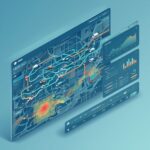
- TerraRoam – An AI-powered, vehicle-aware open-source travel intelligence platform for safe routing, camping discovery, and real-time trip planning. AGPLv3
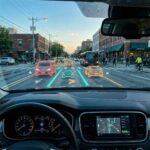
- TrueRoute – An open-source, vehicle-aware navigation and travel intelligence platform that combines real-time routing, scenic exploration, offline navigation, and AI-powered trip planning into a modular system for any device.

- TruthVIN – An open-source, transparent vehicle valuation system that replaces opaque pricing guides with real market data and verifiable algorithms. AGPLv3

- Vehicle Overlay System (VOS) – A universal retrofit platform that adds secure AI, connectivity, and edge computing capabilities to any vehicle without modifying safety-critical systems. AGPLv3

- VoltMesh – An open-source mobility platform that replaces proprietary in-car systems with a universal, hardware-agnostic mesh network for real-time vehicle intelligence, EV energy optimization, and fleet coordination.

- Wayfare – An open-source mobility platform that lets owners earn with autonomous or human-driven rides while giving riders transparent pricing, real-time availability, and local discovery features.
A Specification Branding License can be purchased for the basket of AI and the Automobile Specs
Purchasing a Specification Basket grants the purchaser a perpetual license for attribution-free use of every existing specification included within that category, as well as any additional specifications subsequently added to the category.
Specification Basket Pricing:
| Network Size | # of Users | One-Time Price | Duration |
| Small | 1 – 20 | $5,000,000 | Perpetual License |
| Medium | 21- 1000 | $11,000,000 | Perpetual License |
| Large | 1001 + | Custom Quote | Custom Quote |
