
Simulation games and immersive online environments are quickly becoming more than entertainment, they are evolving into powerful testing grounds for real-world decision making. From city-building platforms to complex geopolitical simulators, these systems allow individuals, businesses, and governments to explore how policies unfold over time. Games like SimCity and Cities: Skylines already demonstrate how zoning laws, taxation, infrastructure investment, and environmental policies can ripple through a population. By interacting with these systems, users gain an intuitive understanding of cause and effect, something that is often difficult to grasp through theory alone.
Beyond civics, simulation environments extend into physics, economics, and social dynamics, offering a controlled space where the “gravity” of any situation, both literal and metaphorical, can be explored. Platforms like Kerbal Space Program let users experiment with orbital mechanics and engineering constraints, while strategy simulations model supply chains, resource scarcity, and behavioral responses. The ability to tweak variables in real time allows for rapid iteration, helping users identify optimal solutions without the financial cost, environmental impact, or human risk associated with real-world trial and error.
As these simulations become more advanced, integrating real data, artificial intelligence, and collaborative input, they will increasingly mirror the complexity of actual societies. Policymakers could test legislation before implementation, businesses could forecast market reactions, and communities could visualize the outcomes of local decisions. In high-stakes scenarios such as disaster response or public health planning, these virtual environments may help prevent loss of life by revealing unintended consequences before they occur. The future points toward a world where informed decisions are not just debated, but experienced, refined through simulation before they ever touch reality.
All specifications are released under the GNU Affero General Public License v3.0 or later (AGPL-3.0+) and are available for free use, provided the attribution requirements under Section 7 of the license are maintained. Organizations that require attribution-free deployment may obtain a Specification Branding License. Licensing fees are determined based on the specification category, the intended deployment scope, and the size of the network or environment in which the specification is implemented.
The Open Arsenal specifications are designed as foundations, not disposable products. They define reusable architectures that can be implemented, extended, combined, modified, and adapted to changing technologies and real-world requirements. Modular design allows individual capabilities to evolve without forcing an entire system to be replaced, while vendor-neutral architecture helps preserve independence and interoperability.
Long-term infrastructure requires long-term thinking. Open-source licensing encourages examination, reuse, modification, and collaboration, while perpetual commercial licensing can provide organizations with lasting rights to deploy a specification without making foundational infrastructure dependent on recurring licensing renewals. The objective is to create technological foundations that can remain useful as companies, technologies, platforms, and business models change.
Simulation specifications created by Roxanne Ardary:

- Agility Ascension – An open-source dog agility training and competition simulation game where players progress from practice fields to global trials through skill, focus, distance handling, and environmental challenge systems.

- CineRenderAI – An open-source real-time neural rendering engine that uses AI to transform low-cost game renders into cinematic-quality visuals with enhanced lighting, materials, and temporal stability.
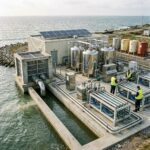
- Circulis Aqua – A modular, AI-assisted water infrastructure design system for desalination, reuse, and geospatial water grid routing that enables scalable, plug-in water independence from homes to regional networks.

- CIRRUS GRID – A modular atmospheric intelligence network that enables persistent, self-healing connectivity and distributed compute across ground, airborne swarm, and stratospheric layers.

- Clause – An open-source civic simulation platform where real-world laws, budgets, and population dynamics interact to model the long-term consequences of governance decisions.

- Cognitive Crisis Simulator – A voice-driven, multi-agent platform that models how intelligence, communication, and decision-making evolve under high-pressure crisis conditions.
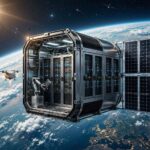
- DesignFlux – An AGPL 3.0+ open-source engineering platform that combines physics-based simulation, AI-assisted design, and manufacturing workflows into a modular system for developing advanced thermal, aerospace, and industrial technologies.
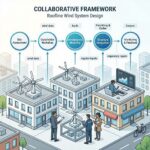
- EarthRoot Network – An open-source, AI-assisted infrastructure design system that generates location-aware, modular renewable energy and material solutions shaped by local environmental conditions.

- FlightDynamics – An open, AI-native specification for modular, local-first launch planning, mission engineering, and orbital operations.

- GrowLocal – An open-source, AI-assisted town simulation platform that models how communities can grow sustainably using local skills, resources, and cooperative systems.
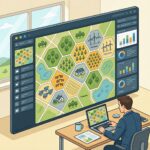
- HarvestIQ – An AI-powered land optimization and simulation platform that helps property owners maximize profitability, sustainability, and real-world land use efficiency through geospatial intelligence and modular AI systems.

- Infinity Arena – An open-source modular fighting game where players create customizable fighter pairs, design synergistic combat systems, and battle in an infinite, evolving arena built for both competitive play and community-driven creation.

- LibreSpaceflight – An open-source platform for simulating spacecraft docking, orbital mechanics, mission planning, and autonomous space operations to make spaceflight science accessible to everyone.

- LunaSphere – An open AGPL-3.0+ specification for designing and simulating the development of a self-sustaining lunar civilization, including habitats, life support systems, resource generation, manufacturing, launch infrastructure, and expansion beyond Earth.

- Modular Non-Invasive BCI Engineering Platform – A modular open neuroengineering framework for designing, simulating, and deploying non-invasive brain–computer interface systems through wearable, hardware, ML, sleep, and legal assurance layers.

- NextEquity – An open-source AI-driven business simulation where players design competitive, automation-era companies that balance profit with shared prosperity and human-centered economic outcomes.

- Pelagia – An open, modular specification for creating living ocean worlds through underwater exploration, marine ecosystems, diving, discovery, and interoperable simulation systems.
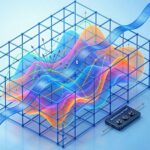
- PhysicsMesh Platform – A law-driven simulation platform where physical reality is computed through invariant physics laws, full provenance traceability, and modular spatiotemporal physics systems.
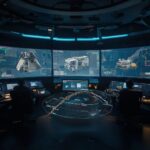
- RealityPass – An open-source, physics-accurate, AI-assisted space simulation platform for designing, testing, and experiencing spacecraft systems before real-world construction.

- RegenBlueprint – An open specification for intelligent ecosystem design, combining AI planning, soil engineering, water systems, biodiversity restoration, scientific monitoring, and community collaboration to transform degraded landscapes into resilient regenerative ecosystems.
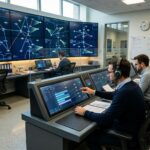
- Separation Engine – An open-source AGPL 3.0+ airspace computation platform that uses predictive AI, physics-based trajectory modeling, and real-time environmental analysis to mathematically maintain safe aircraft separation.

- SteadyMission – An open-source AI simulation and mission-alignment platform that helps organizations achieve strategic goals without compromising their values, ethics, or long-term direction.

- StructIQ – AI-assisted structural engineering platform optimizing building designs with digital twin capabilities. AGPLv3

- The Evidence Constitution – A modular investigative simulation platform that teaches constitutional reasoning through structured evidence analysis, legal frameworks, and multiplayer civic decision-making.

- The Uncertain Machine – An open-source AI-powered scientific simulation platform where players learn by experimenting with dynamic models of reality instead of memorizing facts.

- Velyndor – An open source AI-driven MMO where players explore, craft, fight, and leave a lasting legacy in a dynamic world. AGPLv3
A Specification Branding License can be purchased for the basket of Simulation Specs
Purchasing a Specification Basket grants the purchaser a perpetual license for attribution-free use of every existing specification included within that category, as well as any additional specifications subsequently added to the category.
Specification Basket Pricing:
| Network Size | # of Users | One-Time Price | Duration |
| Small | 1 – 20 | $7,000,000 | Perpetual License |
| Medium | 21- 1000 | $17,000,000 | Perpetual License |
| Large | 1001 + | Custom Quote | Custom Quote |
