
The Information Age has arrived at a moment many would describe as the dawning of the Age of Aquarius, a period defined not by hierarchy and scarcity, but by openness, flow, and shared intelligence. Information no longer sits behind locked doors; it moves freely, carried across networks that connect nearly every human being on Earth. Code is shared, software is built collaboratively, and knowledge is no longer reserved for institutions but accessible to anyone willing to engage with it. This shift is not just technological, it is philosophical. It reflects a growing belief that intelligence itself is not something to be owned, but something to be expressed, refined, and exchanged.
In this environment, each individual is no longer confined to predefined roles. People are uncovering their natural abilities, skills, perspectives, and creative instincts that may have gone unnoticed in previous systems. The path forward becomes deeply personal: first building a life that aligns with one’s own values and purpose, and then extending that creation outward to benefit others. The tools of the Information Age make this not only possible, but scalable. A single idea, shared openly, can ripple outward and reshape entire communities.
AI assistants are becoming companions in that process. They help surface forgotten intentions, reconnect individuals with their original goals, and map out practical ways to move forward. With real-time feedback and adaptive guidance, they act as both mirror and navigator, reflecting who someone is while helping chart where they’re going. Rather than replacing human intuition, they amplify it, turning scattered thoughts into structured action and long-term vision into daily progress.
The children born into this era inherit something fundamentally different. They grow up in a world where access to knowledge is immediate and expression is encouraged. Their brilliance is not something they have to fight to maintain, it is supported, nurtured, and expanded as they grow. While they may share tools and frameworks, no two paths will be identical. Each child, shaped by their own perspective, will carve out a unique version of fulfillment, a small, personal utopia that contributes to a larger, interconnected whole. In that diversity of creation, the true promise of this age begins to take form.
All specifications are released under the GNU Affero General Public License v3.0 or later (AGPL-3.0+) and are available for free use, provided the attribution requirements under Section 7 of the license are maintained. Organizations that require attribution-free deployment may obtain a Specification Branding License. Licensing fees are determined based on the specification category, the intended deployment scope, and the size of the network or environment in which the specification is implemented.
The Open Arsenal specifications are designed as foundations, not disposable products. They define reusable architectures that can be implemented, extended, combined, modified, and adapted to changing technologies and real-world requirements. Modular design allows individual capabilities to evolve without forcing an entire system to be replaced, while vendor-neutral architecture helps preserve independence and interoperability.
Long-term infrastructure requires long-term thinking. Open-source licensing encourages examination, reuse, modification, and collaboration, while perpetual commercial licensing can provide organizations with lasting rights to deploy a specification without making foundational infrastructure dependent on recurring licensing renewals. The objective is to create technological foundations that can remain useful as companies, technologies, platforms, and business models change.
The “How To” specifications created by Roxanne Ardary:

- AgoraTV – An open-source, democratically owned global broadcasting platform that empowers independent voices through public media infrastructure, multilingual accessibility, and transparent governance.

- Aivana – A global AI-native, fully encrypted social network built on verified human identity, modular communication systems, and privacy-first design.

- Alpha Risk Review – A modular adversarial intelligence system that stress-tests business plans to reveal structural weaknesses, failure points, and the conditions required for success.

- Aquatic Forge – An open source specification for designing adaptive aquatic food production systems using AI, local conditions, sustainable infrastructure, and intelligent production planning.

- Archima – An open source AI architectural intelligence specification that transforms architectural vision into coordinated 2D and 3D designs, building systems, schematics, regulatory adaptations, and detailed construction documentation.

- AuthorityCore – A focus-oriented AI governance and reliability framework that improves long-horizon task execution through objective contracts, jurisdiction-aware reasoning, evidence-constrained retrieval, and human-in-the-loop oversight.

- AuthTrace AI – A provenance-first AI system that verifies authorship, tracks content lineage, and transforms human knowledge into structured, licensable digital assets.

- BankDividend – An open source AI specification that finds, compares, calculates, and explains banking options to help users maximize earnings, minimize fees, and prioritize federally insured accounts.

- BranchWeb – AI-powered platform turning GitHub/GitLab repositories into interactive, deployable websites. AGPLv3

- BudgetBotics – An open-source, AI-powered platform that helps companies of all sizes plan, execute, and govern corporate stock buybacks with precision, automation, regulatory compliance, and intelligent financial modeling.

- CasaBot – An open-source AI-powered real estate companion that continuously monitors listings, analyzes market trends, and delivers personalized alerts to help users find their ideal home.

- CivicRadar – An open-source AI-powered legislative intelligence platform that tracks, analyzes, and explains proposed laws across U.S. federal, state, and local governments in real time.

- Cognitive Orchestration Stack (COS) – An open-source modular AI infrastructure framework that separates reasoning from generation to improve efficiency, reduce compute waste, and enable structured, schema-driven cognitive workflows.

- CommonGrid – An open-source, AI-powered platform that transforms web data into structured, shareable datasets through a decentralized, globally scalable network.

- Commons Reasoning Network – An open-source, AGPL 3.0+ federated intelligence infrastructure for autonomous agents, distributed compute, and interoperable AI systems built on a shared reasoning and governance framework.
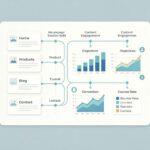
- ContentGraph – A relational layer over WordPress content that transforms pages and posts into a structured, graph-based system using modular Spec Containers.

- CortexCFO – An AGPL-3.0+ locally hosted AI CFO platform that transforms historical financial data into future strategy through expense forecasting, cash flow prediction, financial risk detection, and private AI-powered business intelligence.

- CreatorGrid – An open source AI specification for protecting creator rights through copyright, licensing, contracts, jurisdiction, AI use, and prior art loophole detection.

- DealSignal – An AI-driven real estate investment specification designed to analyze properties, identify potential opportunities, and support data-driven flipping decisions.

- Distributed Economic Governance System – A modular AGPL 3.0+ platform for simulating, analyzing, and improving transparency, accountability, and structural resilience in economic and organizational systems.

- Domestic Economics – An AI-powered open source specification that measures, values, and documents household labor, mental work, household production, and the economic contribution behind a functioning home.

- EarthMetrics – An open-source global database preserving historical and real-time environmental measurements under the principle of Observation Without Interpretation.

- EchoCore Memory – An open source AGPL 3.0+ modular Linux memory orchestration system that combines predictive memory management, adaptive swap strategies, workload modes, and intelligent RAM scheduling.

- Effortless OS – The operating system for removing unnecessary work through time valuation, delegation intelligence, and life simulation modeling.

- EurekaAI – An open-source AI system that analyzes scientific literature to identify research gaps and generate novel hypotheses to accelerate scientific discovery. AGPLv3

- EviAI – A privacy-first, fully self-contained AI platform that delivers verifiable answers, secure workflows, and powerful multimodal creation all in one place.

- EvolutionOS – A modular, multi-agent economic intelligence platform that evaluates industry viability, models macroeconomic and market conditions, and identifies alternative business opportunities for long-term strategic decision-making.

- FarmWeb Intelligence – An open-source agricultural intelligence platform that maps farms, ownership structures, public funding, and related public records into a unified transparency network.

- Feedback360 – A modular civic intelligence platform that uses AI to break down legislation into plain language, collect constituent feedback per line item, and generate secure, aggregated insights for transparent and informed decision-making.

- FinishLine – An open-source AI-powered debt analysis and optimization platform that evaluates debt instruments, loan terms, interest costs, and prepayment penalties to help users identify the smartest path to becoming debt free.

- FortiMind – Your Ethical and Encrypted Decision Partner, a human-governed AI framework focused on secure, transparent, and constitutionally aligned decision support.

- HappyHouse – An AI-powered home maintenance and property intelligence platform for tracking systems, managing repairs, and predicting maintenance needs.

- HARMONYFLOW – AI platform guiding users toward win/win decisions with ethical reasoning, predictive modeling, and transparency. AGPLv3

- Heirloom Haven – An open-source, AGPL-3.0+ seed exchange platform for preserving and sharing native, non-GMO, organic, and heirloom seeds through community-driven collaboration.

- HotSide Collective – An open-source thermal infrastructure standard that enables safe recovery of waste heat from liquid-cooled compute systems and converts it into usable energy for buildings and district heating networks.

- Human Decision Specification (HDS) – A modular open standard for human-guided AI systems that ensures all AI-driven recommendations and actions are validated through explicit human intent and approval.

- HydroForge AI – An open specification for generative hydraulic engineering that designs and optimizes water systems, aqueducts, channels, pipe networks, storage, and gravity-fed infrastructure.

- InspectHome – An open-source, transparency-first real estate platform that requires full property disclosures, verified documentation, and encrypted user data to help people find homes with confidence.

- IntentMesh – The missing layer between code and purpose, providing a governance and infrastructure system that aligns software, licensing, and execution through structured intent.

- Keyra – An open-source, quantum-safe authentication platform that replaces passwords with cryptographic key-based security.
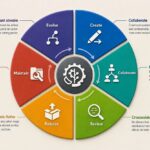
- Knowledge Continuum – An open source modular specification for building, organizing, sharding, licensing, and monetizing knowledge bases, datasets, and AI models across every information sector.

- LatticeOS – A modular, human-in-the-loop operating system for governed multi-agent AI orchestration with structured execution, deterministic workflows, and full auditability.

- Lexara – A jurisdictional intelligence and compliance structuring system that translates state and federal legal rules into executable, risk-scored compensation models and smart contract-ready frameworks.
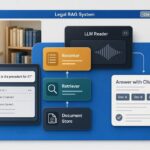
- LexCrosscheck – An AI-powered legal research and retrieval system for verified citations, jurisdictional conflict detection, case briefs, legal writing, and source-grounded legal analysis with human oversight.
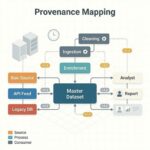
- LicenseTrace – A semantic provenance and compilation system that ensures software is traced, attributed, and only built when no existing implementation can be reused.

- LightThroughWords – Platform analyzing historical texts to uncover emotional patterns and shared human wisdom. AGPLv3

- LumenKinetic Network – A modular piezoelectric surface system that converts motion into electrical energy while generating real-time spatial intelligence data from physical interactions.

- Lumina – An open-source universal gaming platform that unifies global game discovery, creator monetization, and secure peer-to-peer digital ecosystems.

- MindLedger for Real Estate – A modular, open-source real estate operating system that unifies CRM, listings, marketing, analytics, compliance, and AI automation into a single intelligent platform.

- NeighborhoodGraph – An open-source civic intelligence platform that transforms housing, land, infrastructure, and community data into an interactive knowledge graph for exploring how neighborhoods evolve over time.

- Nexora – An AI-driven enterprise endpoint governance and security intelligence system that monitors software usage, enforces policy-based risk classification, and generates structured, auditable security insights.
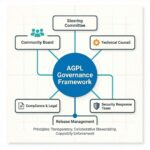
- No Lock-In Compliance Standard (NLCS v1.0) – A modular open architecture and governance standard designed to eliminate vendor lock-in through fully swappable system components, portable infrastructure design, and AI-driven compliance enforcement.

- OmniScientia – A modular AI scientific discovery framework that enables inquiry-driven learning, safe experimentation, verified research, and exploration across all fields of science.

- Oneiros – AI platform interpreting recurring dreams about feminine figures, tracking emotional growth, attachment patterns, and relational readiness. AGPLv3
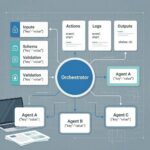
- OntologyRuntime – A semantic runtime system that converts natural language intent into structured, validated, and execution-ready ontologies for machine execution.

- OpenCrawler – An open-source, privacy-focused search engine designed for transparent rankings, verified business results, and user-controlled data.

- OpenEnergyStack – An open-source platform for planning, building, and governing transparent energy infrastructure and next-generation power systems.

- OpenFiscal – Open-source financial management platform for transparent budgeting, accounting, and reporting. AGPLv3

- OpenKernel – An AGPL-3.0+ operating kernel for human capability and trajectory intelligence that transforms skills, experience, and resources into structured, positive-sum creation systems.

- OpenLimb – An open-source modular robotics platform for designing and building robotic limbs, wearable systems, and industrial robotics through open hardware, AI-assisted engineering, and community-driven innovation.

- Perspective Engine – A modular, human-in-the-loop AI system that detects trends, reduces content saturation, and reframes information into unique, niche-aligned perspectives for creators.

- PhotonForge – An open-source framework for array-level control and simulation of optical emitter systems, enabling programmable structured light through modular scheduling, feedback, and hardware abstraction.

- PiloQuiet – An AI-driven research and development specification focused on discovering innovative, permanent, pain-free, and precisely targeted hair removal technologies beyond laser and electrolysis.

- Plantellect – AI gardening platform identifying plants, guiding permaculture, and providing sustainable garden advice. AGPLv3
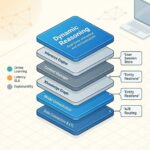
- Project Solstice – A layered reasoning system stack that transforms computation into structured, verifiable cognition through modular, self-improving intelligence architecture.

- PromptWave – AI companion guiding creators through step-by-step image/video generation with real-time suggestions and iterative improvements. AGPLv3

- ProvenanceHub – An open-source, community-driven provenance and lineage intelligence system that tracks the origin, evolution, and relationships of digital artifacts, specifications, and ideas over time.

- PublicEnforcer – An open-source transparency platform that tracks publicly available federal enforcement data, case activity, financial penalties, and outcomes through searchable, source-linked timelines and analytics.

- PublicSafe – An open-source browser extension that protects user privacy by encrypting sensitive data locally in the browser before it is transmitted online.

- Ralph Workflow – An unattended AI agent orchestration system that automates long-running software development tasks through structured planning, iterative implementation, and review cycles.

- RePlay Worlds – An open-source imagination platform where children create magical characters, interactive adventures, and full cinematic stories that can be replayed like movies.

- RequestStamp – A self-hosted edge request identity system that assigns every request a unique, traceable ID for observability, rule-based decisions, and explainable infrastructure behavior.

- Resolva – An open-source AI-powered platform that transforms complaints into actionable solutions through collective intelligence, community collaboration, and intelligent system redesign.

- RightGuide – An open-source AI-powered legal analysis platform that helps users understand applicable laws, identify potential legal issues, locate reporting agencies, and discover legal resources based on jurisdiction-specific regulations.

- RoadCraft – An open-source AI motorcycle copilot system that enhances rider safety through helmet-based intelligence, real-time sensor fusion, and optional emergency vehicle control assistance.

- SandNet – An open source, privacy-first, modular game creation and virtual world platform that enables creators, families, and organizations to build, share, and collaborate in secure, user-owned digital environments.

- Saturnet – A modular AI-driven astronomy intelligence system that turns the night sky into real-time, interactive knowledge by identifying celestial objects, tracking satellites, and providing intelligent sky narration.

- SignalNet – An open-source AI system that analyzes public claims against real-world actions to reveal alignment, inconsistency, and accountability across organizations and individuals.

- Sonaris – A modular multi-task AI specification for researching frequency, sound, vibration, energy, movement, matter, biology, healing, and technology.

- Sovereign Sheets – An open-source, encrypted spreadsheet and data platform with built-in natural-language AI, specialized agents, databases, automation, analytics, visualization, collaboration, and integrations.

- SpecDNA – A human directed specification framework that enables AI agents to evolve, fork, and modify specifications while preserving provenance, licensing, attribution, and intellectual property risk analysis.

- StoryWeaver – An open, modular AI skill library that enables agents to discover, share, and execute reusable capabilities across local, private, and cloud environments.

- Stratum – An AI governance layer for MCP systems that enforces policy, permissions, context controls, approvals, sandboxed execution, and audit logging before any AI-driven action is executed.

- ThreadGraph – A modular, graph-structured agent swarm runtime that transforms complex tasks into executable, parallel workflows using swarms of coordinated agents and tools.

- TraceGraph OS – A scientific intelligence operating system that maps how science actually happens through provenance, causal reasoning, temporal modeling, and fully traceable AI-driven discovery workflows.

- ValidationOS – An open-source AI assurance platform that validates, optimizes, certifies, and monitors AI models across edge hardware environments to transform AI performance into proven results.

- VaultCore OS – The Trusted Core of Financial Intelligence, an open-source platform for verifying federally insured financial institutions and delivering structured, AI-powered banking intelligence.

- VectorForge – A modular digital twin and runtime validation platform that safely simulates, tests, and verifies applications, AI systems, and infrastructure changes before deployment.

- VectorMeter – An open, modular resource metering system built on the Open Metering Specification (OMS) that provides immutable, auditable tracking of compute, time, and infrastructure usage across AI and physical systems.

- Vendra – An open-source, modular operating system for smart vending infrastructure that combines machine management, AI optimization, payments, analytics, and connected retail services.

- VeritasChain – An open AGPL-3.0+ specification for evidence-based causal intelligence that connects legal, economic, historical, and institutional data to help AI systems understand how decisions create long-term consequences.

- VeritasCode – A modular, retrieval-first, open-source AI platform that analyzes laws across every jurisdiction to identify potential conflicts, constitutional questions, and legal inconsistencies through transparent, evidence-based analysis.

- VigilQuantum – A next-generation quantum operating system featuring autonomous self-healing AI, predictive cybersecurity, and real-time quantum-enhanced system resilience.

- VoltIQ – An open AGPL-3.0+ specification that serves as the energy brain for edge devices, providing intelligent power optimization, adaptive energy management, and AI-driven efficiency across distributed computing systems.

- WealthGuard – An open-source, end-to-end encrypted retirement and generational wealth planner that uses AI to optimize investments, taxes, and long-term financial legacy planning.

- Weave Foundry – The intelligence layer of fabric, transforming creative ideas into real, buildable garments through AI-driven design, material intelligence, and resource-aware fabrication.

- Wingstead – An AI-powered bird knowledge and habitat design system for understanding avian care, planning healthy living spaces, integrating birds into gardens and homesteads, and generating custom coop, house, and pen designs.

- Workflow Certification – An open specification for validating AI agent workflows through standardized requirements for architecture, governance, security, reliability, and lifecycle management.

- YieldStack – An open-source, AGPL-3.0+ agricultural intelligence platform that optimizes water and nitrogen use through modular AI systems, real-time data integration, and explainable agronomic decision-making.
A Specification Branding License can be purchased for the basket of Wiki Specs
Purchasing a Specification Basket grants the purchaser a perpetual license for attribution-free use of every existing specification included within that category, as well as any additional specifications subsequently added to the category.
Wiki Specification Basket Pricing:
| Network Size | # of Users | One-Time Price | Duration |
| Small | 1 – 20 | $3,340,000 | Perpetual License |
| Medium | 21- 1000 | $12,700,000 | Perpetual License |
| Large | 1001 + | Custom Quote | Custom Quote |
