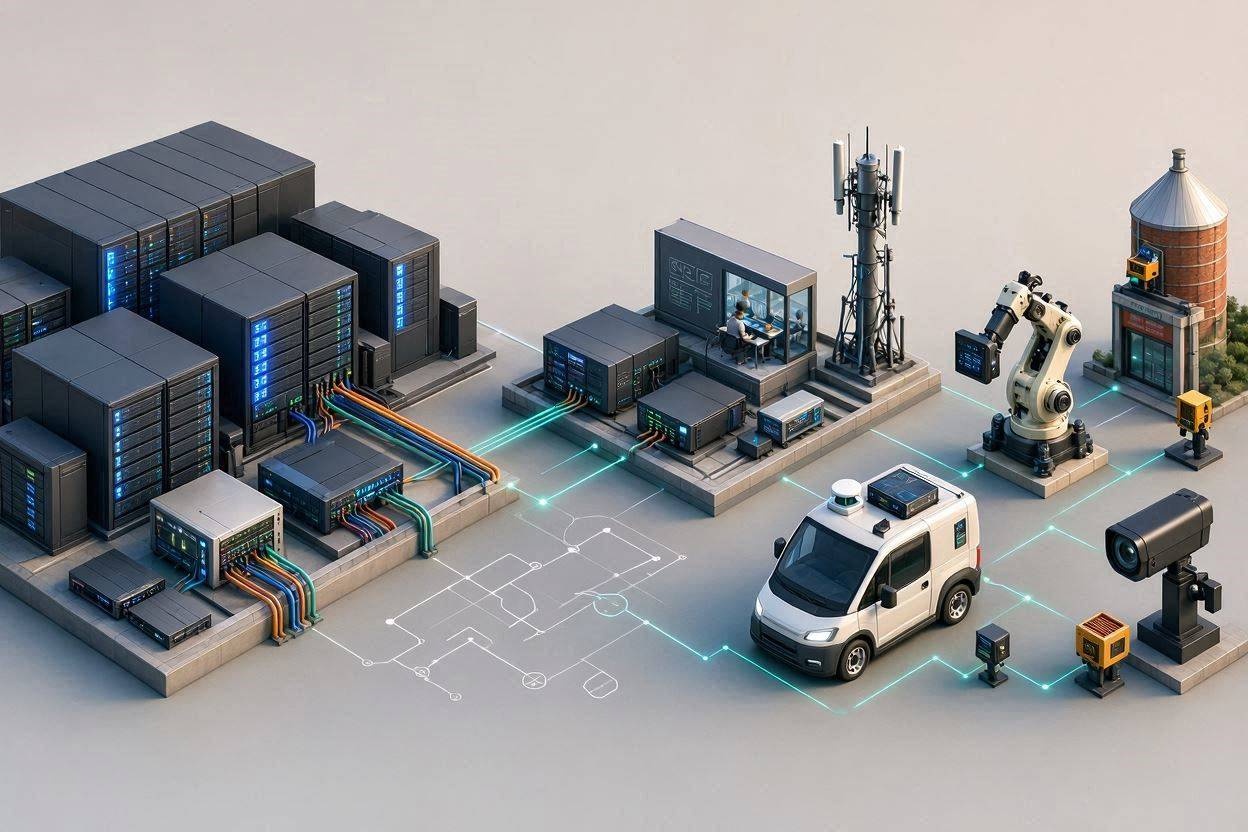
The open source hardware movement is quietly but unmistakably gaining momentum, extending the philosophy of shared knowledge beyond software into the physical world. Schematics, blueprints, and design files are increasingly being published for anyone to study, modify, and build upon. What once required access to proprietary labs or corporate manufacturing pipelines is now becoming accessible to individuals, small communities, and independent innovators. From circuit boards to agricultural tools, the barrier between idea and execution is shrinking as knowledge becomes a shared global resource rather than a guarded asset.
This shift is being accelerated by the rise of distributed manufacturing technologies. 3D printing, CNC machining, and modular fabrication systems allow designs to be produced locally, on demand, and at increasingly lower costs. Instead of centralized production dominating global supply chains, communities can manufacture what they need, when they need it, tailored to their specific environments. This localized approach not only improves resilience but also empowers regions across the world to participate in innovation rather than depend on it from afar.
As these systems evolve, traditional proprietary business models will face growing pressure. When designs are transparent and reproducible, value shifts away from exclusivity and toward service, customization, trust, and community contribution. Companies that once relied on secrecy may find themselves outpaced by ecosystems that iterate faster through open collaboration. In many ways, this mirrors the trajectory of open source software, where shared development has consistently outperformed isolated efforts in speed, security, and adaptability.
At its core, this movement reflects a deeper truth about human progress: intelligence is cumulative and collective. Every invention builds upon countless ideas that came before it, whether acknowledged or not. No breakthrough has ever truly emerged in isolation. Open source hardware simply makes this reality visible, honoring the interconnected nature of innovation. As more people contribute, refine, and expand upon shared designs, the pace of advancement accelerates, not for a select few, but for everyone willing to participate.
All specifications are released under the GNU Affero General Public License v3.0 or later (AGPL-3.0+) and are available for free use, provided the attribution requirements under Section 7 of the license are maintained. Organizations that require attribution-free deployment may obtain a Specification Branding License. Licensing fees are determined based on the specification category, the intended deployment scope, and the size of the network or environment in which the specification is implemented.
The Open Arsenal specifications are designed as foundations, not disposable products. They define reusable architectures that can be implemented, extended, combined, modified, and adapted to changing technologies and real-world requirements. Modular design allows individual capabilities to evolve without forcing an entire system to be replaced, while vendor-neutral architecture helps preserve independence and interoperability.
Long-term infrastructure requires long-term thinking. Open-source licensing encourages examination, reuse, modification, and collaboration, while perpetual commercial licensing can provide organizations with lasting rights to deploy a specification without making foundational infrastructure dependent on recurring licensing renewals. The objective is to create technological foundations that can remain useful as companies, technologies, platforms, and business models change.
The Hardware specifications created by Roxanne Ardary:

- Ambientium – An open hardware specification for discovering and developing materials, devices, construction methods, and computing architectures designed for ambient-temperature operation.

- Aureon – An open, modular wearable platform that combines health monitoring, customizable pendant and choker designs, interactive features, personal safety, automation, and an extensible artistic ecosystem.

- Autonomous Loop – A self-hosted Continuous Improvement Operating System for air-gapped AI factories that enables organizations to monitor, evaluate, govern, and continuously improve AI systems while keeping data and intelligence workflows under their control.

- CircuitPath – An open-source advanced packaging and chiplet connectivity framework designed to enable modular, high-bandwidth AI and HPC architectures. AGPLv3

- Circulis Aqua – A modular, AI-assisted water infrastructure design system for desalination, reuse, and geospatial water grid routing that enables scalable, plug-in water independence from homes to regional networks.

- CNC Companion – An open-source AI-powered tutor for apprentice machinists that provides step-by-step guidance, real-time feedback, and adaptive learning for CNC and shop floor machines. AGPLv3

- Conduit Systems – An open-source system architecture platform for simulation-driven chiplet integration and data movement optimization in modern AI and high-performance computing systems. AGPLv3

- FieldCell Systems – Open-source hydrogen energy storage system designed to replace disposable battery infrastructure with modular, repairable, and long-duration power storage for homes, farms, and microgrids. AGPLv3

- KineticKind – An open-source SUV platform designed to improve mobility and independence through intelligent seat-assist technology and accessibility-first vehicle engineering.

- LAVE – An open-source human-scale hover research platform exploring distributed electric thrust, real-time stabilization, and transparent low-altitude flight experimentation.

- Modular Non-Invasive BCI Engineering Platform – A modular open neuroengineering framework for designing, simulating, and deploying non-invasive brain–computer interface systems through wearable, hardware, ML, sleep, and legal assurance layers.

- OpenFabric – An open modular Hardware Abstraction Layer specification providing a universal device layer for edge computing, AI systems, IoT, robotics, and connected hardware ecosystems through standardized interfaces.

- TotalRemote – An open-source universal TV control system that unifies IR, HDMI-CEC, and smart TV APIs into a single plugin-based platform for seamless multi-device control.

- Trionyx – A multi-agent robotic fleet intelligence and scheduling platform that coordinates autonomous systems through real-time task orchestration, simulation-first validation, and distributed decision-making.
A Specification Branding License can be purchased for the basket of Hardware Specs
Purchasing a Specification Basket grants the purchaser a perpetual license for attribution-free use of every existing specification included within that category, as well as any additional specifications subsequently added to the category.
Specification Basket Pricing:
| Network Size | # of Users | One-Time Price | Duration |
| Small | 1 – 20 | $3,400,000 | Perpetual License |
| Medium | 21- 1000 | $7,000,000 | Perpetual License |
| Large | 1001 + | Custom Quote | Custom Quote |