
Smarter braking, smarter coasting, smarter driving.
A key conceptual influence behind the development of RegenMatrix and its related systems came from recent legal and policy discussions around authorship and intellectual property in AI-generated work. In particular, the U.S. federal case Thaler v. Perlmutter (D.C. Circuit, 2023) affirmed the position that works generated without sufficient human authorship are not eligible for copyright protection under current U.S. law. The court upheld the U.S. Copyright Office’s determination that copyright requires a human author, reinforcing the broader principle that AI alone cannot be recognized as the legal creator of protected works. While this decision is often summarized online in simplified terms, the actual ruling is narrower: it centers on the requirement of human authorship rather than a blanket statement about all AI-generated output.
In parallel, broader industry movements around intellectual property transparency also shaped the direction of the project. A notable example is the decision by Tesla, led by Elon Musk, to open portions of its automotive patent portfolio in 2014 as part of a stated effort to accelerate electric vehicle adoption and innovation across the industry. While not a full “open source” release in the software sense, this approach signaled a shift toward more permissive access to core EV technologies and encouraged broader experimentation in vehicle efficiency and electrification systems.
Taken together, these developments helped frame a larger design philosophy: if AI-generated systems exist in a legal and industrial space where authorship is non-exclusive and certain foundational technologies are becoming more open, then there is an opportunity to build infrastructure that prioritizes interoperability, accessibility, and collaborative improvement. From that perspective, the RegenMatrix concept emerged as a pathway toward retrofit-friendly, AI-assisted energy regeneration systems that could be applied across existing vehicle platforms, rather than being locked into closed manufacturer ecosystems.
This line of thinking ultimately evolved into the practical foundation for both RegenMatrix and AIChauffeur: modular systems that aim to bring AI-driven efficiency, regenerative optimization, and adaptive control to a wider range of vehicles. The goal is not only technical improvement in energy recovery and driving efficiency, but also a structural shift toward more open, extensible automotive intelligence that can be independently studied, modified, and deployed.
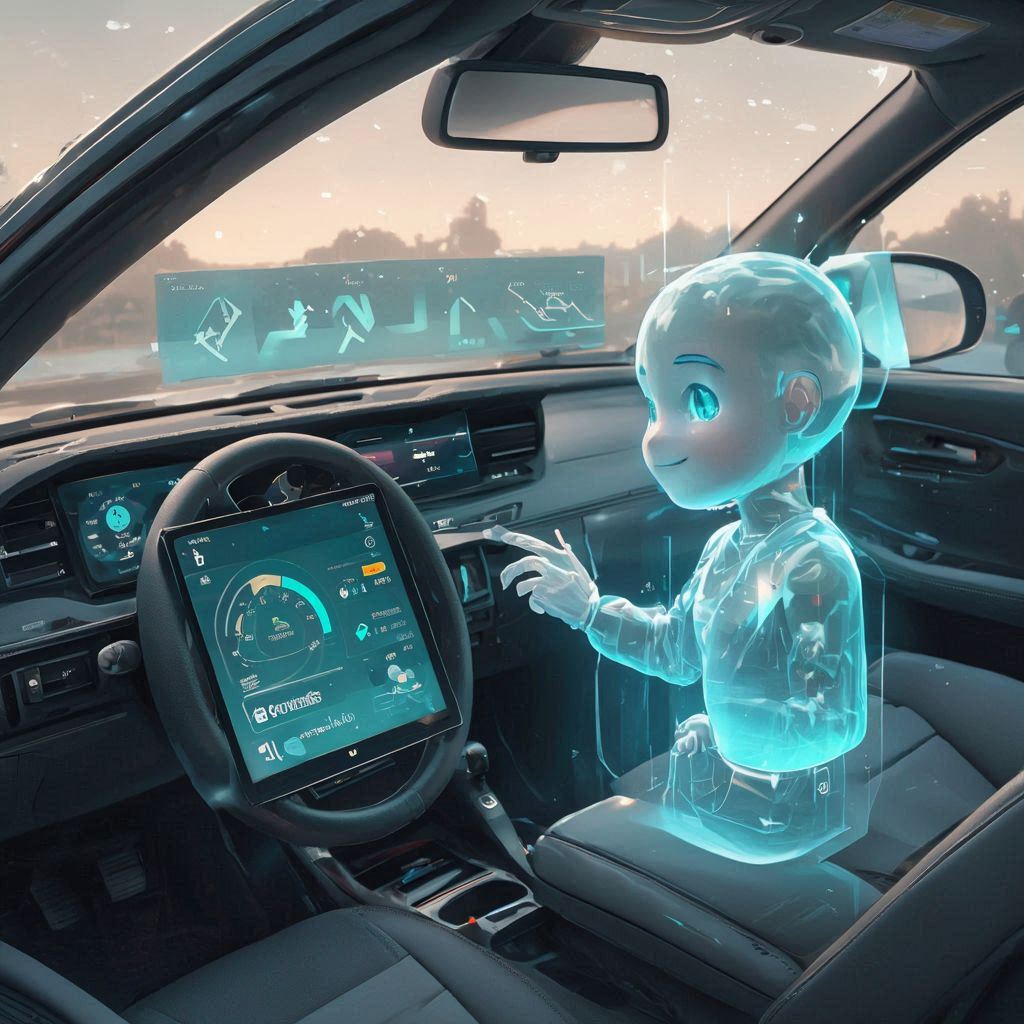
- AIChauffeur – AI driving efficiency coach for vehicles, providing real-time coaching and predictive energy optimization. AGPLv3