
Dynamic energy recovery for every road.
The initial concept behind RegenMatrix began in a conceptual discussion about the fundamental limitation of modern vehicles: why they must rely on external charging or fuel input rather than continuously improving their own energy efficiency through in-motion recovery systems. That line of questioning led to the idea of whether vehicles could be enhanced with electrically driven recovery mechanisms—effectively “energy-aware” systems that capture and reuse energy dynamically while driving, rather than treating energy consumption as a one-way loss. The exploration focused on whether electrical turbines, regenerative modules, and adaptive control systems could be combined into a unified architecture capable of improving efficiency across different driving conditions.
From that exploration, iterative questioning of AI-assisted design pathways helped shape what became the RegenMatrix module. Early discussions revolved around feasibility constraints such as drag, load balancing, mechanical limits, and electrical conversion efficiency. While the concept of self-sustaining motion in a literal sense conflicts with the conservation of energy, the design direction shifted toward something more grounded and achievable: maximizing energy recapture, minimizing waste, and optimizing conversion efficiency in real time. This reframing was important, because it moved the system away from unrealistic perpetual motion ideas and toward a practical engineering goal—making every phase of motion contribute to improved efficiency through intelligent control.
This naturally led into the development of AIChauffeur as a complementary system focused on behavioral optimization rather than hardware alone. If RegenMatrix represented the mechanical and electrical layer of energy recovery, AIChauffeur represented the intelligence layer, teaching and adapting driving behavior to reduce unnecessary energy loss. Together, they form a dual-layer approach: one system optimizes how energy is captured and redistributed, while the other optimizes how energy is used in real time through driver interaction and AI guidance.
The broader vision that emerged was retrofitting: enabling any vehicle—regardless of age, drivetrain type, or manufacturer—to benefit from modern AI-driven efficiency systems. This approach reframes vehicle improvement as an additive layer rather than a replacement cycle, extending the lifespan and capability of existing transportation infrastructure. By making both RegenMatrix and AIChauffeur open source, the barrier to entry is significantly reduced, allowing independent developers, researchers, and communities to contribute improvements without the economic constraints typically associated with proprietary automotive systems. This open model is intended to make advanced energy optimization more accessible, collaborative, and economically feasible at scale.
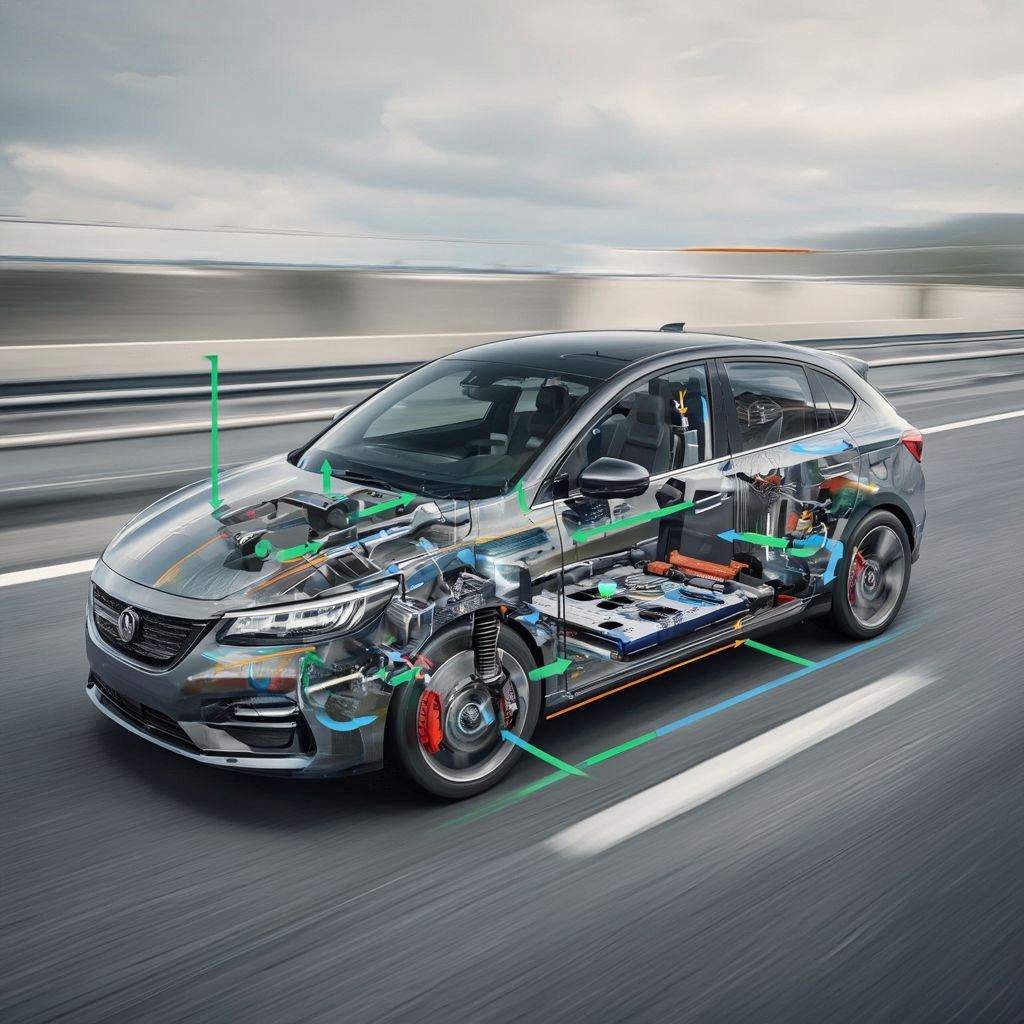
- RegenMatrix – AI-controlled regenerative energy system for vehicles optimizing energy recovery and efficiency. AGPLv3