
Powering Developers, Unifying Data
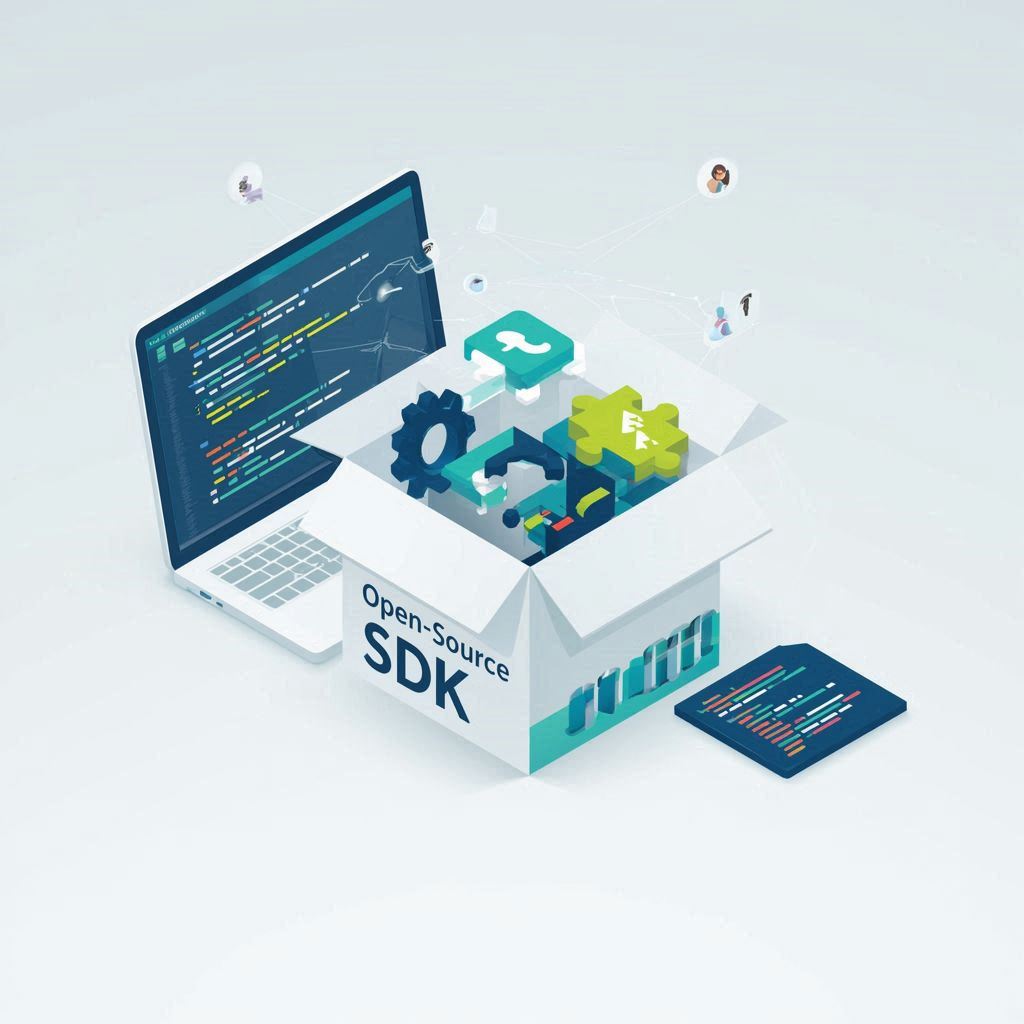
A universal open-source SDK addresses one of the most persistent friction points in modern software development: the fragmentation of APIs and AI services. Today, developers are forced to learn, integrate, and maintain dozens of different interfaces—each with its own authentication system, response format, rate limits, error handling, and quirks. This leads to duplicated effort, brittle integrations, and systems that are expensive to maintain over time. A universal SDK removes that burden by creating a single, consistent abstraction layer over all services, allowing developers to focus on building functionality instead of constantly rewriting integration logic.
In this context, Singularity stands out by aiming to unify not just APIs, but also LLMs and modern AI services under one coherent system. Instead of treating each provider as a separate ecosystem, Singularity standardizes interaction through a shared interface. That means switching between providers—or even using multiple providers at once—becomes a configuration change rather than a redevelopment effort. Features like unified authentication, response normalization, automatic retries, and multi-protocol support directly eliminate the most common sources of integration failure.
What makes Singularity particularly compelling is its emphasis on extensibility and future-proof design. The plugin-based architecture allows new APIs and models to be added without modifying core logic, ensuring the system can evolve alongside the rapidly changing AI and API landscape. Combined with capabilities like provider failover, streaming support, and cross-provider orchestration, Singularity doesn’t just simplify integration—it actively enhances what developers can build. It turns fragmented services into a cohesive, interoperable system where data and intelligence can flow freely.
This specification is released under the GNU Affero General Public License v3.0 or later (AGPL-3.0+) and may be used freely with required attribution under Section 7. A Specification Branding License is available for attribution-free deployments, with fees based on usage, scope, and deployment size.
Specification Repository:
- Singularity – Universal SDK connecting developers to any API/LLM with standardized responses, auth, rate-limiting, and plugin support. AGPLv3
Specification Pricing:
| Network Size | # of Users | One-Time Price | Duration |
| Small | 1 – 20 | $1,300,000 | Perpetual License |
| Medium | 21- 1000 | $2,300,000 | Perpetual License |
| Large | 1001 + | Custom Quote | Custom Quote |