
Pollinator Ecology Intelligence System
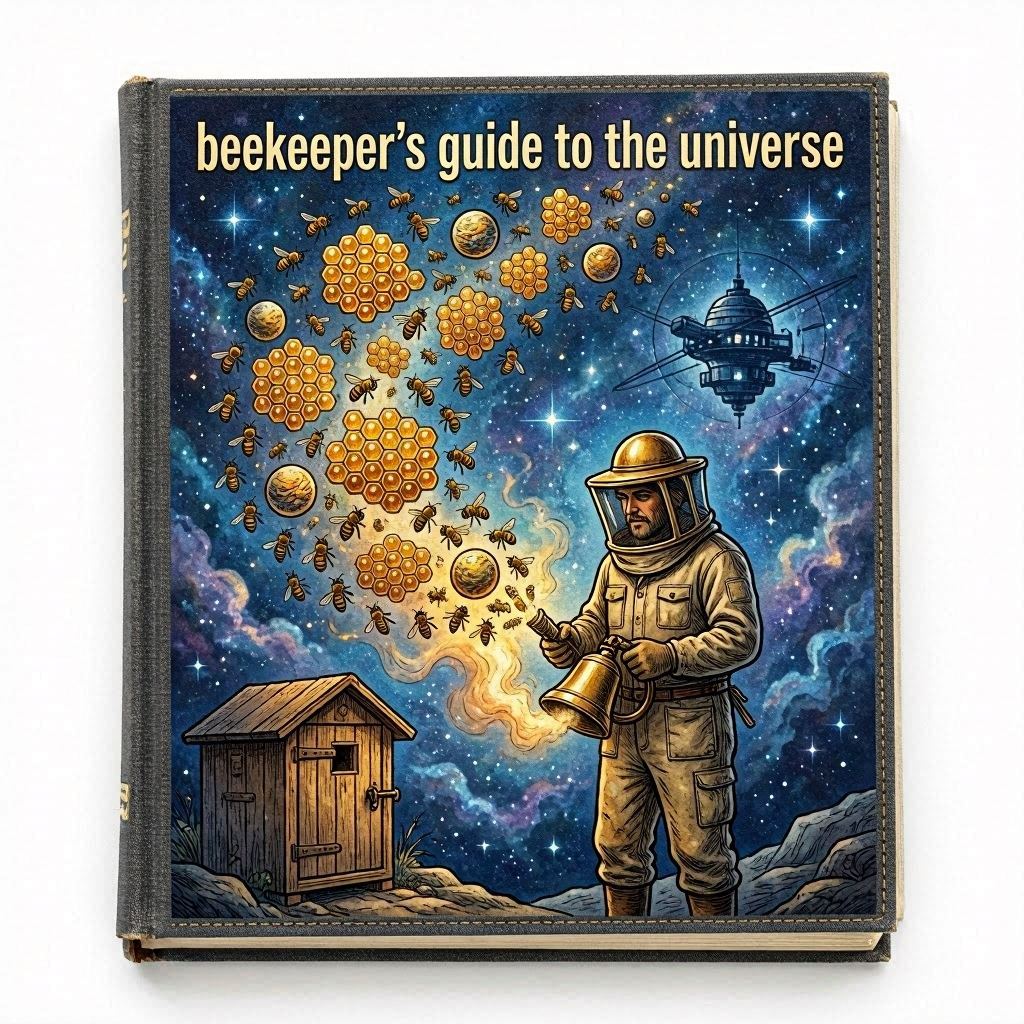
Beekeeper’s Guide to the Universe is an open-source, AI-assisted ecological intelligence platform designed to support the design, care, and long-term sustainability of pollinator ecosystems. It combines structured biological knowledge with spatial mapping, environmental simulation, and AI reasoning to help users understand how bees, plants, climate, predators, and habitat design interact as a single connected system. Rather than treating beekeeping as an isolated practice, the platform frames it as part of a broader ecological network that can be observed, modeled, and improved over time.
At its core, the system is built around modular bee biology frameworks that cover species such as honey bees, bumble bees, mason bees, carpenter bees, and native solitary bees. Each module includes lifecycle behavior, seasonal care requirements, forage preferences, disease susceptibility, and climate adaptation data. These biological models are then connected to habitat engineering tools that guide users in building hives, creating nesting structures, and designing environments that attract and support pollinators naturally.
The platform also includes a climate and microclimate simulation layer that models sunlight exposure, wind patterns, frost risk, and moisture behavior across a property. This is combined with a plant and succession ecology engine that maps nectar and pollen availability over time, helping users design landscapes that provide continuous forage throughout the seasons. A predator and threat intelligence system adds another layer of ecological awareness by identifying risks such as wasps, mites, birds, and environmental stress conditions, along with non-destructive mitigation strategies.
Advanced capabilities include a visual AI diagnosis system that allows users to upload images of bees, predators, or hive conditions for probabilistic identification of species, diseases, or stress signals. A spatial mapping and 3D visualization layer reconstructs real-world properties into ecological layouts, recommending optimal hive placement and planting zones based on environmental data. All of these systems are unified through an AI reasoning core and ecological knowledge graph that connects bees, plants, climate, predators, and habitat interactions into a single interpretable model, with a strong emphasis on explainability, uncertainty awareness, and long-term ecological balance.
This specification is released under the GNU Affero General Public License v3.0 or later (AGPL-3.0+) and may be used freely with required attribution under Section 7. A Specification Branding License is available for attribution-free deployments, with fees based on usage, scope, and deployment size.
Specification Repository:
- Beekeeper’s Guide to the Universe – An open-source AI-powered ecological intelligence platform for designing, simulating, and sustaining pollinator ecosystems through bee biology, habitat engineering, climate modeling, and visual ecological analysis.
Specification Pricing:
| Network Size | # of Users | One-Time Price | Duration |
| Small | 1 – 20 | $100,000 | Perpetual License |
| Medium | 21- 1000 | $300,000 | Perpetual License |
| Large | 1001 + | Custom Quote | Custom Quote |
