Home / Oscillara / Oscillara Specification
Oscillara
Visualizing Sound. Engineering Solutions.
Overview
Oscillara is a comprehensive, modular Acoustic Engineering and Simulation Specification designed to advance the science, modeling, analysis, visualization, and practical application of sound and vibration across multiple industries. It establishes a unified engineering framework for understanding acoustic behavior, simulating complex sound environments, analyzing wave propagation, evaluating material properties, and developing solutions to real-world acoustic challenges.
Oscillara integrates acoustic physics, computational modeling, numerical simulation, structural vibration analysis, sound measurement, environmental acoustics, and intelligent engineering assistance into an extensible specification. Its capabilities support the investigation of sound behavior across different environments, materials, structures, frequencies, and operating conditions.
The specification is designed to accommodate applications ranging from architectural acoustics and industrial noise control to aerospace engineering, automotive development, underwater acoustics, medical ultrasound, and advanced acoustic materials. Its modular architecture allows specialized capabilities to be incorporated without compromising the functionality or independence of the core engineering modules.
Core Objectives
- Establish a comprehensive framework for acoustic engineering, modeling, and simulation.
- Support accurate analysis of sound waves, frequency behavior, resonance, vibration, and acoustic energy.
- Provide tools and methodologies for simulating sound propagation across different environments and materials.
- Support room acoustics, structural acoustics, environmental acoustics, and electroacoustic engineering.
- Enable advanced analysis of sound absorption, reflection, diffraction, transmission, and reverberation.
- Incorporate computational modeling and AI-assisted engineering capabilities.
- Support acoustic measurement, testing, calibration, validation, and performance evaluation.
- Enable visualization of acoustic behavior through interactive models, sound maps, and engineering representations.
- Support the development, comparison, and optimization of acoustic materials and engineering solutions.
- Establish interoperability with external engineering systems, simulation tools, measurement equipment, and industry standards.
- Encourage reproducible engineering analysis through documented assumptions, simulation parameters, and validation procedures.
- Provide an extensible foundation for specialized acoustic engineering applications across multiple industries.
Core Modules
Acoustic Fundamentals Module
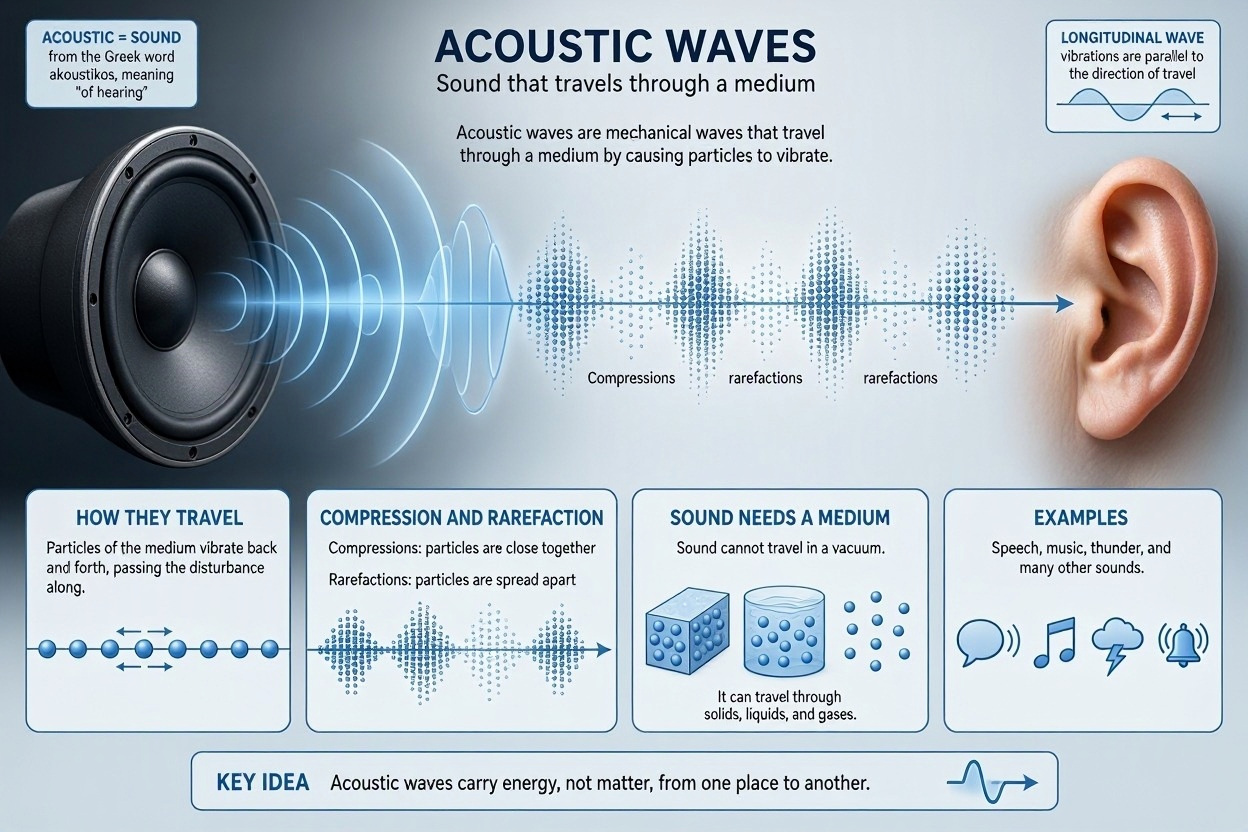
Establishes the scientific foundation for acoustic engineering through the analysis of sound physics, wave behavior, and acoustic energy.
- Sound wave generation, propagation, and interaction.
- Frequency, wavelength, amplitude, phase, and intensity analysis.
- Harmonics, overtones, resonance, and standing waves.
- Longitudinal and transverse wave behavior.
- Sound pressure levels and acoustic power.
- Acoustic impedance and energy transfer.
- Wave interference, superposition, and phase relationships.
- Doppler effect and frequency shifts.
- Psychoacoustics and human sound perception.
- Linear and nonlinear acoustic behavior.
- Frequency-domain and time-domain analysis.
- Acoustic units, measurements, and engineering conversions.
Acoustic Modeling Module
Provides mathematical and computational models for describing, predicting, and evaluating acoustic behavior.
- Mathematical representation of sound waves.
- Acoustic field modeling and spatial analysis.
- Analytical acoustic modeling.
- Wave equation modeling and boundary conditions.
- Acoustic impedance modeling.
- Frequency response and transfer function modeling.
- Near-field and far-field acoustic analysis.
- Point source, line source, and distributed source modeling.
- Multi-source acoustic interaction.
- Acoustic energy distribution and attenuation.
- Environmental and material-dependent acoustic modeling.
- Parametric modeling and configurable engineering variables.
- Model comparison and sensitivity analysis.
- Model uncertainty and assumptions documentation.
Acoustic Simulation Module
Provides simulation capabilities for evaluating sound behavior under different physical, environmental, and structural conditions.
- Sound propagation simulation.
- Reflection, refraction, diffraction, and scattering.
- Sound absorption and transmission simulation.
- Reverberation and echo modeling.
- Acoustic interference and wave interaction.
- Frequency-dependent simulation.
- Time-domain and frequency-domain simulation.
- Near-field and far-field propagation.
- Acoustic boundary condition modeling.
- Multi-source sound propagation.
- Acoustic field distribution.
- Simulation of enclosed and open environments.
- Variable environmental and material parameters.
- Comparative simulation scenarios.
- Simulation accuracy assessment and validation.
- Reproducible simulation configurations.
Room Acoustics Module
Supports the analysis, design, simulation, and optimization of indoor acoustic environments.
- Room geometry and acoustic modeling.
- Reverberation time analysis.
- Early and late reflection analysis.
- Sound diffusion and absorption.
- Room modes and standing wave analysis.
- Acoustic pressure distribution.
- Speech intelligibility analysis.
- Sound isolation and transmission evaluation.
- Acoustic treatment planning.
- Wall, floor, and ceiling material evaluation.
- Speaker placement and listening position analysis.
- Room frequency response.
- Auditorium, theater, studio, office, and residential acoustic modeling.
- Room acoustic optimization.
- Comparative room design evaluation.
Structural Acoustics Module
Provides capabilities for evaluating interactions between sound waves, structures, and mechanical vibrations.
- Structural vibration analysis.
- Acoustic-structural interaction.
- Structure-borne sound propagation.
- Resonance and modal analysis.
- Natural frequency identification.
- Mechanical vibration transmission.
- Structural damping analysis.
- Panel vibration and sound radiation.
- Structural sound insulation.
- Material stiffness and damping characteristics.
- Coupled structural and acoustic modeling.
- Vibration isolation analysis.
- Structural noise mitigation.
- Fatigue-related vibration considerations.
- Structural acoustic performance evaluation.
Noise and Vibration Analysis Module
Supports the identification, measurement, evaluation, and mitigation of unwanted sound and mechanical vibration.
- Environmental and industrial noise analysis.
- Noise source identification.
- Frequency spectrum analysis.
- Sound pressure level evaluation.
- Continuous, intermittent, and impulsive noise analysis.
- Vibration frequency and amplitude analysis.
- Noise exposure assessment.
- Noise propagation and distribution.
- Vibration transmission pathways.
- Resonance-related noise identification.
- Active and passive noise control analysis.
- Noise reduction and attenuation modeling.
- Vibration isolation and damping evaluation.
- Acoustic performance comparisons.
- Noise and vibration reporting.
Material Acoustics Module
Provides engineering analysis of materials and their acoustic properties.
- Sound absorption coefficients.
- Sound transmission loss.
- Acoustic impedance and surface impedance.
- Reflection and scattering characteristics.
- Material density and porosity considerations.
- Frequency-dependent acoustic properties.
- Vibration damping characteristics.
- Composite and multilayer material modeling.
- Porous absorber analysis.
- Resonant absorber modeling.
- Material thickness and geometry evaluation.
- Acoustic metamaterial property integration.
- Material performance comparisons.
- Acoustic treatment optimization.
- Material specification and performance documentation.
Environmental Acoustics Module
Supports the analysis and simulation of sound propagation in outdoor and natural environments.
- Outdoor sound propagation.
- Environmental noise mapping.
- Terrain and ground absorption effects.
- Atmospheric absorption.
- Temperature, humidity, and wind considerations.
- Atmospheric sound refraction.
- Urban and rural acoustic environments.
- Building and infrastructure sound reflections.
- Industrial and transportation noise.
- Community noise assessment.
- Acoustic impact modeling.
- Sound source distribution.
- Environmental noise mitigation.
- Geographic acoustic visualization.
- Environmental acoustic performance reporting.
Electroacoustics Module
Provides engineering capabilities for systems that convert electrical signals into acoustic energy and acoustic signals into electrical representations.
- Loudspeaker and microphone modeling.
- Transducer characteristics.
- Electroacoustic conversion.
- Frequency response analysis.
- Sensitivity and efficiency evaluation.
- Impedance matching.
- Acoustic radiation and directivity.
- Speaker enclosure modeling.
- Microphone polar response.
- Multi-driver system analysis.
- Amplifier and transducer interaction.
- Acoustic feedback analysis.
- Audio system performance evaluation.
- Speaker placement and coverage modeling.
- Electroacoustic system optimization.
Acoustic Measurement Module
Establishes standardized methodologies for collecting, evaluating, and validating acoustic engineering measurements.
- Sound pressure measurement.
- Frequency and spectral measurement.
- Acoustic intensity measurement.
- Sound power measurement.
- Reverberation time measurement.
- Vibration and acceleration measurement.
- Microphone and sensor calibration.
- Measurement uncertainty evaluation.
- Environmental measurement conditions.
- Measurement equipment integration.
- Real-time acoustic monitoring.
- Measurement data acquisition.
- Experimental and simulated result comparisons.
- Measurement traceability.
- Test documentation and reporting.
Computational Engineering Module
Provides the computational foundations for complex acoustic analysis and simulation.
- Analytical and numerical computation.
- Finite element acoustic analysis.
- Boundary element acoustic analysis.
- Finite difference wave simulation.
- Finite volume modeling where applicable.
- Statistical energy analysis.
- Geometrical acoustics and ray tracing.
- Computational fluid acoustics integration.
- Multiphysics simulation.
- Coupled acoustic and structural analysis.
- Mesh and spatial resolution considerations.
- Numerical stability and convergence evaluation.
- Solver configuration and comparison.
- Computational resource management.
- Large-scale simulation support.
- Computational accuracy and error assessment.
AI Engineering Assistant Module
Provides intelligent assistance for acoustic engineering workflows, analysis, and optimization.
- AI-assisted acoustic modeling.
- Natural language engineering queries.
- Acoustic simulation configuration assistance.
- Sound pattern and frequency analysis.
- Noise source classification.
- Acoustic anomaly detection.
- Material selection recommendations.
- Acoustic treatment recommendations.
- Design parameter optimization.
- Simulation result interpretation.
- Predictive acoustic performance analysis.
- Comparative engineering evaluation.
- Automated report generation.
- Engineering workflow assistance.
- Model validation support.
- Confidence, uncertainty, and assumption reporting.
- Human-in-the-loop engineering review.
AI-generated recommendations and simulation interpretations must remain distinguishable from measured results, validated calculations, and independently verified engineering conclusions. AI assistance must not replace qualified professional judgment where engineering safety, regulatory compliance, or critical performance requirements are involved.
Visualization and Reporting Module
Provides visual representations and documentation of acoustic engineering models, measurements, and simulation results.
- Two-dimensional acoustic field visualization.
- Three-dimensional sound propagation visualization.
- Frequency spectrum displays.
- Spectrogram generation.
- Acoustic pressure and intensity maps.
- Sound distribution and coverage maps.
- Vibration mode visualization.
- Structural deformation representations.
- Reverberation and reflection visualization.
- Frequency response graphs.
- Acoustic material performance comparisons.
- Interactive simulation views.
- Time-dependent acoustic visualization.
- Measurement and simulation overlays.
- Engineering charts and diagrams.
- Configurable technical reports.
- Simulation summaries and validation records.
- Exportable engineering results.
Engineering Validation and Optimization Module
Establishes methodologies for evaluating acoustic designs, validating simulation results, and improving engineering performance.
- Analytical and experimental validation.
- Simulation-to-measurement comparisons.
- Model accuracy assessment.
- Sensitivity and uncertainty analysis.
- Parameter optimization.
- Multi-objective engineering optimization.
- Acoustic performance benchmarking.
- Noise reduction evaluation.
- Material and structural comparisons.
- Design constraint management.
- Engineering tolerances.
- Reproducibility and validation records.
- Performance acceptance criteria.
- Optimization history and result tracking.
- Independent engineering review support.
Interoperability and Data Exchange Module
Establishes common methods for exchanging acoustic engineering information between Oscillara and external systems.
- Acoustic model import and export.
- Simulation configuration exchange.
- Measurement data exchange.
- Frequency response data exchange.
- Geometry and structural model integration.
- Engineering metadata preservation.
- Material property data exchange.
- External solver integration.
- Measurement instrument integration.
- Standardized data representation.
- Version and compatibility management.
- Data validation and integrity checks.
- Documented interfaces and extension points.
- Support for applicable open engineering formats and standards.
Optional Plugin Modules
Optional plugins extend Oscillara into specialized engineering disciplines while maintaining compatibility with the core specification. Plugins may introduce additional simulation methodologies, industry-specific models, specialized measurement capabilities, and domain-specific engineering workflows.
Architectural Acoustics Plugin
- Building acoustic design and optimization.
- Residential and commercial acoustic modeling.
- Auditorium and theater acoustics.
- Concert hall sound distribution.
- Recording studio design.
- Classroom and workplace acoustic analysis.
- Building sound insulation.
- Interior acoustic treatment.
- Speech intelligibility optimization.
- Building acoustic performance evaluation.
Automotive Acoustics Plugin
- Vehicle cabin acoustic modeling.
- Engine and powertrain noise analysis.
- Road and tire noise simulation.
- Wind noise modeling.
- Vehicle structural vibration analysis.
- Cabin sound distribution.
- Electric vehicle acoustic engineering.
- Noise, vibration, and harshness evaluation.
- Vehicle sound insulation.
- Automotive acoustic optimization.
Aerospace Acoustics Plugin
- Aircraft cabin acoustics.
- Engine and propulsion noise analysis.
- Aerodynamic noise simulation.
- Aircraft structural vibration.
- Rotor and turbine acoustics.
- Launch and propulsion acoustic environments.
- Spacecraft acoustic testing.
- Acoustic fatigue assessment.
- Aerospace noise mitigation.
- Aerospace acoustic performance evaluation.
Marine Acoustics Plugin
- Underwater sound propagation.
- Marine acoustic field modeling.
- Sonar environment simulation.
- Underwater transducer analysis.
- Marine vessel noise analysis.
- Propeller and propulsion acoustics.
- Underwater noise distribution.
- Seabed and water column acoustic modeling.
- Marine mammal noise exposure assessment.
- Underwater acoustic measurement.
Industrial Acoustics Plugin
- Industrial machinery noise analysis.
- Manufacturing facility sound mapping.
- Equipment vibration analysis.
- Industrial acoustic treatment.
- Machinery enclosure optimization.
- Factory noise propagation.
- Workplace noise assessment.
- Industrial sound isolation.
- Equipment noise reduction.
- Industrial acoustic compliance evaluation.
Audio Engineering Plugin
- Recording and production environment modeling.
- Studio monitor placement.
- Speaker system optimization.
- Mixing and mastering room analysis.
- Acoustic response correction.
- Live sound reinforcement.
- Loudspeaker array modeling.
- Audio equipment acoustic evaluation.
- Listening environment optimization.
- Professional audio system analysis.
Medical Acoustics Plugin
- Ultrasound wave modeling.
- Acoustic imaging simulation.
- Ultrasound transducer analysis.
- Tissue acoustic property modeling.
- Acoustic energy distribution.
- Medical ultrasound system optimization.
- Therapeutic ultrasound modeling.
- Acoustic safety evaluation.
- Medical acoustic measurement.
- Biomedical acoustic research support.
Computational Fluid Acoustics Plugin
- Aerodynamic noise modeling.
- Turbulence-generated sound analysis.
- Fluid-structure interaction.
- Flow-induced vibration.
- Jet noise simulation.
- Propeller and rotor noise analysis.
- Computational aeroacoustics.
- Fluid boundary interaction.
- Flow-dependent acoustic propagation.
- Multiphysics acoustic simulation.
Geophysical Acoustics Plugin
- Seismic wave modeling.
- Geological acoustic propagation.
- Subsurface acoustic analysis.
- Ground vibration simulation.
- Acoustic properties of geological materials.
- Underground wave propagation.
- Geological boundary modeling.
- Seismic frequency analysis.
- Geophysical measurement integration.
- Subsurface acoustic visualization.
Acoustic Metamaterials Plugin
- Acoustic metamaterial modeling.
- Engineered wave manipulation.
- Negative effective density and bulk modulus analysis.
- Acoustic cloaking research.
- Frequency-selective absorption.
- Subwavelength acoustic structures.
- Resonant material modeling.
- Acoustic waveguides.
- Advanced sound insulation.
- Metamaterial performance optimization.
Active Noise Cancellation Plugin
- Active noise control modeling.
- Adaptive filtering analysis.
- Phase cancellation simulation.
- Multi-channel noise control.
- Microphone and speaker array optimization.
- Real-time acoustic feedback analysis.
- Environmental noise cancellation.
- Structural vibration cancellation.
- Adaptive noise reduction.
- Active acoustic system performance evaluation.
Acoustic Compliance and Standards Plugin
- Acoustic standards reference management.
- Industry-specific measurement requirements.
- Regulatory noise limit evaluation.
- Building acoustic performance requirements.
- Workplace noise assessment criteria.
- Environmental acoustic requirements.
- Testing methodology references.
- Certification documentation support.
- Compliance evidence management.
- Standards version tracking.
Acoustic Research and Development Plugin
- Experimental acoustic research workflows.
- Advanced wave physics modeling.
- Novel acoustic material investigation.
- Experimental design and testing.
- Research data management.
- Hypothesis and model comparison.
- Reproducible simulation experiments.
- Acoustic behavior discovery.
- Research collaboration.
- Technical publication support.
Specification Branding License (SBL)
Standard
- Fully AGPL-3.0+ compliant system.
- Copyleft enforced for network deployments.
- Required attribution:
- Roxanne Ardary
- https://www.roxanneardary.com/
Optional
- Specification Branding License (SBL)
- Attribution-free commercial deployment.
- Pricing based on scale, usage, and deployment scope.
- https://roxanneardary.com/oscillara/
License & Notice Requirements
Oscillara is released under the GNU Affero General Public License v3.0 or later (AGPL-3.0+).
By contributing to any Open Arsenal project, you agree that your contributions will also be released under this license.
Please note the following:
- All contributions must comply with the AGPL-3.0+ terms.
- Under Section 7 of the license, all redistributions, forks, and derivative works must preserve attribution to:
Roxanne Ardary and roxanneardary.com. - Oscillara specifications are free to use with attribution. A Specification Branding License can be negotiated upon request.
- The project’s notice.md file tracks attribution requirements and contributor acknowledgments.
Any update that adds new contributors or modifies attribution should also updatenotice.md. - When submitting a pull request, ensure that any new files maintain the attribution headers where applicable.
- Network-deployed versions of this software must also remain fully AGPL-3.0+ compliant, including exposure of source code modifications when applicable under the license.
For full legal details, please refer to the AGPL-3.0+ license and the project’s notice.md file.
Notice – Oscillara
Attribution Requirement: Under Section 7 of the AGPL 3.0+ license, all redistributions, forks, and derivative works, including network-deployed versions of this project, must provide attribution to Roxanne Ardary and roxanneardary.com.
Contributors
This file tracks contributors and their specific contributions to the project.
- Roxanne Ardary, roxanneardary.com – November 26, 2026
Created the repository for Oscillara. Developed the foundational concept and modular specification framework for acoustic engineering, sound modeling, wave propagation, vibration analysis, simulation, visualization, and AI-assisted engineering solutions. - [Add other contributors here] – [Date]
[Describe contribution in one sentence]
License – Oscillara
This repository is licensed under the GNU Affero General Public License v3.0 or later (AGPL-3.0+).
Key Points:
- You are free to use, modify, and distribute the code.
- All redistributions, forks, and derivative works or network-deployed versions must also be licensed under AGPL-3.0+ and provide attribution to Roxanne Ardary and roxanneardary.com as required under Section 7 of the license.
- The software is provided “as is,” without warranty of any kind.
For the full license text, see GNU AGPL-3.0 License.