Home / Modulora / Modulora Specification
Modulora
Your Ideas. Your Rights. Your Marketplace.
Overview
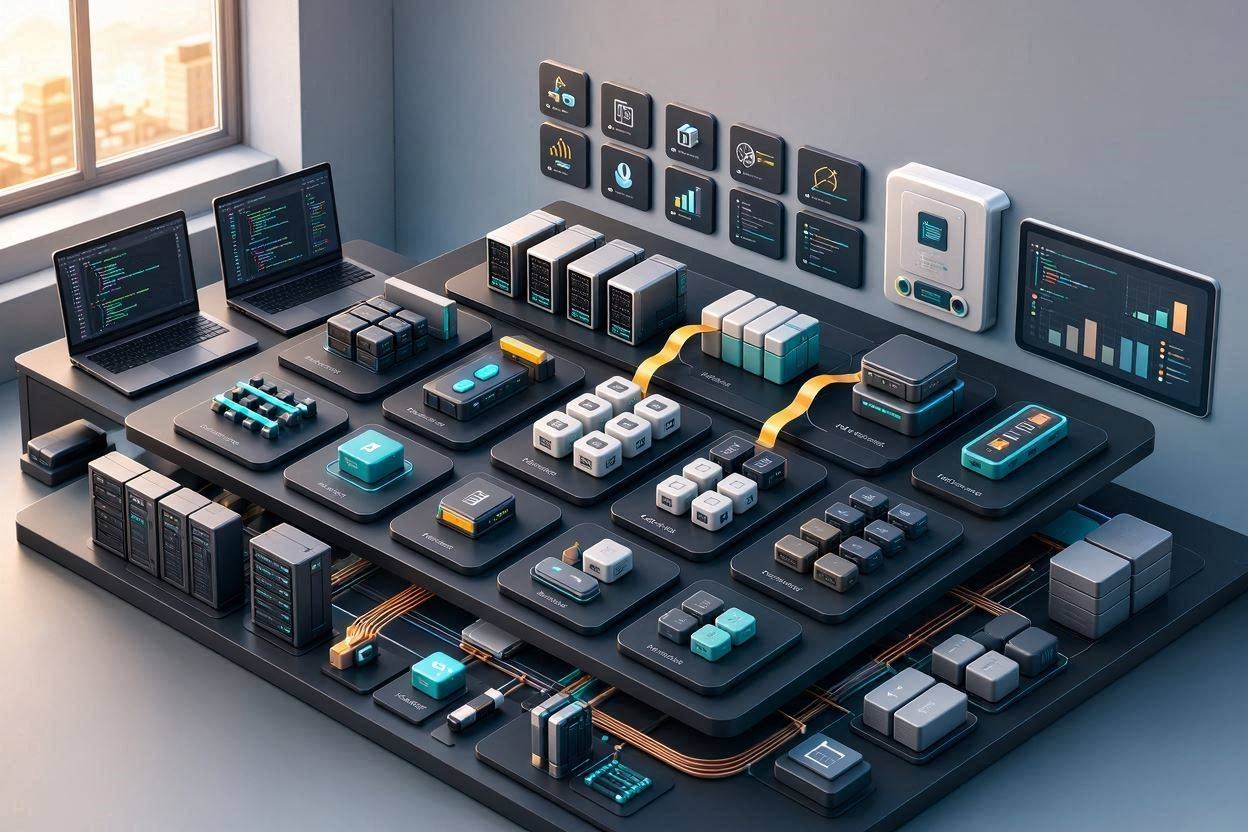
Modulora is an AI-powered global intellectual property marketplace designed to connect creators, innovators, engineers, businesses, and organizations with opportunities to develop, share, license, discover, and commercialize intellectual property across every industry. The platform supports a broad range of intellectual assets, including technical specifications, CAD files, architectural plans, engineering designs, blueprints, product concepts, manufacturing processes, design elements, modular components, and other forms of original intellectual property.
Modulora combines intelligent specification development, intellectual property licensing, commercial pricing intelligence, and global marketplace capabilities within a unified, modular ecosystem. Creators can establish ownership records, define usage permissions, develop customized Specification Branding Licenses, establish tiered pricing structures, and make their intellectual property available for licensing or commercial distribution while retaining control over their work.
The platform incorporates AI-powered discovery and classification capabilities that allow users to locate intellectual property based on descriptions, industries, functional requirements, individual modules, design elements, engineering patterns, technical characteristics, and specific real-world needs. Users can discover complete specifications or license individual components independently, identify compatible designs, combine modular assets, and explore existing solutions to technical and commercial challenges.
Modulora is designed for worldwide accessibility through universal multilingual capabilities that support the translation of specifications, technical documentation, licensing agreements, marketplace listings, search queries, and industry-specific terminology into any language. Its extensible architecture supports specialized industry plugins, allowing the marketplace to expand across disciplines while maintaining a unified intellectual property exchange.
Core Modules
AI Specification Development
- Assist users in creating, organizing, expanding, and refining comprehensive technical and conceptual specifications.
- Generate specifications from descriptions, concepts, requirements, engineering objectives, design references, and existing documentation.
- Identify required components, functional relationships, dependencies, constraints, and implementation considerations.
- Organize specifications into modular structures that allow individual components to be independently developed, modified, licensed, and distributed.
- Support specifications ranging from individual components and design concepts to complex, multi-module systems.
- Identify opportunities to improve completeness, compatibility, functionality, and commercial applicability.
- Maintain specification versions, revision histories, and development records.
- Support collaborative specification development with configurable contributor permissions.
- Generate standardized documentation for different industries and intended audiences.
- Preserve creator-defined requirements, original concepts, and intellectual property boundaries.
Specification Branding License Generator
- Provide AI-assisted creation of customized Specification Branding Licenses (SBLs) for specifications, designs, engineering patterns, CAD files, blueprints, and other intellectual property.
- Evaluate the characteristics, intended applications, commercial value, and distribution requirements of submitted intellectual property.
- Generate licensing recommendations based on creator preferences, industry requirements, usage permissions, and commercial objectives.
- Support attribution-based and attribution-free licensing arrangements.
- Allow creators to establish standard licensing terms and optional commercial licensing agreements.
- Define permissions for personal, educational, research, professional, commercial, enterprise, and industrial applications.
- Establish permissions for modification, adaptation, derivative works, redistribution, manufacturing, production, and sublicensing.
- Support exclusive and nonexclusive licensing arrangements.
- Allow licensing restrictions based on industry, geographic region, deployment scope, distribution volume, and intended application.
- Provide configurable attribution requirements and creator recognition provisions.
- Support licensing of complete specifications, individual modules, design elements, and component collections.
- Generate customized licensing documentation and standardized marketplace license summaries.
- Identify conflicting, ambiguous, or incomplete licensing provisions.
- Maintain licensing versions, revision histories, and associated intellectual property records.
- Require creator approval before publishing or activating generated licensing terms.
Intellectual Property Rights and Ownership Management
- Provide intellectual property registration and recordkeeping capabilities for marketplace submissions.
- Maintain creator identities, ownership declarations, authorship records, and contribution histories.
- Associate specifications, designs, blueprints, CAD files, modules, and other assets with their respective creators and licensing terms.
- Record original publication dates, revisions, derivative relationships, and licensing history.
- Support multiple contributors, co-creators, organizations, and rights holders.
- Allow creators to establish ownership and licensing permissions for individual components within larger specifications.
- Distinguish original intellectual property from third-party contributions, incorporated materials, and derivative works.
- Maintain provenance records documenting the origin and development history of submitted assets.
- Support documentation of ownership claims and associated evidence.
- Provide mechanisms for reporting disputed ownership, unauthorized distribution, and licensing violations.
- Maintain transparent records of licensing permissions and changes to intellectual property terms.
- Distinguish ownership verification, creator declarations, and independently established legal rights.
- Avoid representing marketplace registration as automatic proof of copyright, patent ownership, trademark rights, or legal exclusivity.
Tiered Pricing and Commercial Valuation
- Analyze submitted intellectual property and recommend appropriate commercial pricing structures.
- Evaluate complexity, originality, development effort, functional value, market demand, commercial applications, and potential distribution scale.
- Consider industry benchmarks, comparable licensing opportunities, and available marketplace data.
- Generate configurable pricing tiers for different audiences and usage requirements.
- Support free, personal, educational, research, professional, business, enterprise, industrial, and exclusive licensing options.
- Allow creators to establish fixed pricing, recurring licensing fees, usage-based pricing, negotiated agreements, and volume-based pricing.
- Support individual module pricing, complete specification pricing, bundled asset pricing, and combination licensing.
- Provide separate pricing recommendations for modification rights, manufacturing rights, redistribution, and sublicensing.
- Evaluate geographic pricing considerations and regional purchasing power.
- Allow creators to establish minimum prices, maximum prices, promotional pricing, and customized commercial terms.
- Provide revenue projections and comparative pricing analysis.
- Track historical pricing, licensing activity, demand, and marketplace performance.
- Explain pricing recommendations and identify the factors influencing estimated commercial value.
- Allow creators to override AI-generated recommendations and establish their own pricing.
- Distinguish AI-generated estimates from verified market valuations and actual transaction prices.
Global Intellectual Property Marketplace
- Provide a centralized international marketplace for publishing, discovering, licensing, purchasing, and commercializing intellectual property.
- Support technical specifications, CAD files, architectural plans, engineering designs, blueprints, product designs, manufacturing processes, design patterns, and modular components.
- Allow individual creators, businesses, research organizations, educational institutions, and other entities to establish marketplace accounts.
- Provide customizable creator profiles, organizational profiles, portfolios, and intellectual property catalogs.
- Support free and paid listings.
- Allow creators to publish complete specifications, individual modules, individual design elements, or collections of related assets.
- Display licensing terms, pricing tiers, permitted uses, creator information, technical descriptions, and available documentation.
- Support downloadable assets, licensed access, negotiated agreements, and authorized distribution.
- Provide configurable listing visibility and publication controls.
- Support product previews, technical summaries, design illustrations, documentation, and available file formats.
- Enable creators to update listings while maintaining revision and licensing histories.
- Support private listings, restricted-access assets, and invitation-based commercial opportunities.
- Provide marketplace categories, collections, featured listings, and industry-specific discovery pages.
- Support international transactions and regionally appropriate marketplace presentation.
- Provide tools for creators to manage listings, licensing activity, customers, and commercial opportunities.
Universal Discovery and Search Engine
- Provide AI-powered search across all marketplace intellectual property and supported industry categories.
- Support searches based on natural language descriptions, functional requirements, intended applications, and specific problems users want to solve.
- Allow searches by industry, discipline, specification type, module, component, design element, engineering pattern, material, function, and technical characteristics.
- Identify intellectual property based on what it accomplishes rather than requiring users to know its technical name.
- Support searches for complete systems, individual components, interchangeable modules, and related design patterns.
- Identify similar, complementary, compatible, and potentially reusable intellectual property.
- Allow users to discover individual modules that can be incorporated into other designs or specifications.
- Provide semantic search that recognizes related terminology, synonyms, alternative descriptions, and technical relationships.
- Support multilingual search queries and cross-language discovery.
- Provide advanced filtering by licensing terms, pricing, industry, creator, publication date, compatibility, and intended usage.
- Allow users to compare specifications, designs, licensing options, and individual components.
- Provide recommendations based on user requirements and selected marketplace interests.
- Identify potential duplicate submissions and substantially similar marketplace listings.
- Maintain relationships between specifications, components, design patterns, and derivative works.
- Support searches based on practical needs, engineering challenges, business requirements, and desired outcomes.
Modular Asset and Component Exchange
- Allow specifications to be divided into independently identifiable and licensable modules.
- Support individual component listings and modular asset collections.
- Associate modules with parent specifications, related designs, and dependent components.
- Allow creators to define module-specific descriptions, documentation, licensing terms, and pricing.
- Identify component dependencies and compatibility requirements.
- Support interchangeable modules and alternative design implementations.
- Allow users to combine independently licensed components into larger projects, subject to the applicable licensing permissions.
- Identify overlapping functionality, redundant components, and opportunities for modular integration.
- Provide dependency mapping and relationship tracking.
- Maintain attribution and provenance for each incorporated component.
- Support modular updates without automatically replacing or altering previously licensed versions.
- Allow creators to establish separate commercial terms for individual components and complete systems.
- Provide tools for identifying available modules that satisfy specific functional or technical requirements.
Universal Translation and Localization
- Support translation of marketplace content and technical documentation into any language.
- Translate specifications, descriptions, licensing agreements, technical requirements, design documentation, and marketplace listings.
- Maintain industry-specific terminology and technical meaning during translation.
- Support multilingual technical dictionaries and configurable terminology standards.
- Preserve original-language documentation alongside translated versions.
- Provide multilingual marketplace search and discovery.
- Support cross-language queries that identify relevant intellectual property regardless of the original submission language.
- Translate licensing terms while preserving their original legal structure and meaning.
- Maintain translation histories and associate translated documents with their corresponding source versions.
- Identify terminology that requires specialized industry or legal review.
- Support regional terminology, measurement systems, date formats, currency presentation, and localized marketplace information.
- Allow creators to approve, revise, or replace automatically generated translations.
- Distinguish machine-generated translations from professionally reviewed or legally validated translations.
- Preserve original technical specifications as the authoritative reference when translation differences arise.
Industry Classification and Knowledge Management
- Maintain a universal classification system for intellectual property across industries and technical disciplines.
- Organize assets by industry, specialty, functional purpose, technical characteristics, and application.
- Support hierarchical categories and cross-industry classifications.
- Associate specifications with applicable modules, design elements, engineering patterns, and related technologies.
- Maintain industry-specific terminology and classification standards.
- Support cross-industry discovery of reusable designs and engineering solutions.
- Identify relationships between similar functions across different industries.
- Allow administrators and authorized contributors to expand classification categories.
- Support custom classifications for specialized industries and emerging disciplines.
- Maintain searchable knowledge relationships between specifications, components, materials, processes, and applications.
- Support classification updates without disrupting existing marketplace records.
Licensing and Transaction Management
- Manage licensing requests, purchases, agreements, renewals, and authorized usage permissions.
- Support automated licensing transactions based on creator-approved terms.
- Provide workflows for negotiated licensing agreements and customized commercial arrangements.
- Maintain records of purchased licenses and their associated permissions.
- Associate transactions with the applicable intellectual property version and licensing terms.
- Support recurring licensing, usage-based agreements, and one-time purchases.
- Provide transaction histories, invoices, receipts, and licensing documentation.
- Track licensing expiration dates and renewal requirements where applicable.
- Support commercial licensing inquiries and creator-purchaser communications.
- Provide mechanisms for resolving transaction disputes and reporting unauthorized use.
- Maintain transparent records of licensing changes and transaction status.
- Support configurable marketplace fees, creator revenue allocation, and commercial payment arrangements.
- Provide financial reporting for creators and marketplace administrators.
- Ensure that licensing transactions do not automatically transfer intellectual property ownership unless explicitly established through a separate agreement.
Creator and Organization Management
- Provide individual creator and organizational accounts.
- Support customizable profiles, portfolios, and intellectual property catalogs.
- Allow creators to manage specifications, designs, components, pricing, and licensing terms.
- Support teams, organizations, research groups, and collaborative development projects.
- Provide configurable permissions for contributors, reviewers, administrators, and authorized representatives.
- Track contributions to shared specifications and collaborative intellectual property.
- Support contributor recognition and attribution management.
- Allow creators to manage licensing inquiries and commercial relationships.
- Provide tools for tracking revenue, licensing activity, customer engagement, and marketplace performance.
- Support organization-wide intellectual property management.
- Maintain records of authorized representatives and organizational licensing permissions.
Marketplace Analytics and Intelligence
- Analyze marketplace activity, licensing demand, pricing trends, and industry-specific opportunities.
- Identify emerging requirements and areas of increasing demand.
- Provide creators with insights into specification views, discovery activity, licensing requests, and completed transactions.
- Compare pricing structures across similar intellectual property categories.
- Identify underrepresented marketplace categories and potential development opportunities.
- Analyze demand for individual modules and complete specifications.
- Provide recommendations for improving descriptions, classification, discoverability, and pricing.
- Track licensing revenue and commercial performance.
- Support configurable analytics for individual creators and organizations.
- Distinguish estimated demand and projected revenue from verified marketplace transactions.
- Provide aggregated marketplace intelligence while respecting creator privacy and confidential commercial information.
Collaboration and Development Management
- Support collaborative development of specifications, designs, and modular intellectual property.
- Allow creators to invite contributors, reviewers, technical specialists, and organizations.
- Provide configurable access permissions and contribution responsibilities.
- Maintain revision histories, development milestones, and contributor acknowledgments.
- Support comments, technical reviews, and structured feedback.
- Track changes to individual modules and associated documentation.
- Identify dependencies between contributors and shared components.
- Support controlled collaboration on confidential or unpublished intellectual property.
- Provide approval workflows before publication or licensing.
- Maintain clear records of original contributions and authorized modifications.
Security, Privacy, and Intellectual Property Protection
- Protect creator accounts, unpublished intellectual property, confidential documentation, and marketplace transactions.
- Provide configurable access controls and permissions.
- Support secure storage and authorized distribution of submitted assets.
- Maintain audit records of access, modifications, publication, and licensing activity.
- Support encrypted storage and secure communications where applicable.
- Provide controls for confidential, private, restricted, and public intellectual property.
- Protect sensitive commercial information and unpublished designs.
- Support secure authentication and account recovery.
- Provide mechanisms for reporting suspected intellectual property misuse.
- Maintain provenance and version records to support ownership and licensing investigations.
- Provide clear distinctions between publicly discoverable metadata and restricted intellectual property content.
- Allow creators to control which assets, descriptions, and technical details are publicly accessible.
- Support configurable retention and deletion policies consistent with applicable legal obligations.
AI Governance and Human Oversight
- Provide transparent explanations for AI-generated specifications, licensing recommendations, pricing estimates, classifications, and discovery results.
- Require human approval for publication, ownership declarations, licensing terms, and binding commercial agreements.
- Allow creators to reject, modify, or override AI-generated recommendations.
- Identify uncertain, incomplete, or potentially inaccurate information.
- Distinguish generated content from creator-provided documentation.
- Maintain records of significant AI-assisted modifications and recommendations.
- Avoid representing generated licensing language as legal advice or guaranteed legal protection.
- Identify when specialized legal, engineering, safety, or industry review may be necessary.
- Support configurable AI permissions and levels of automation.
- Prevent AI from independently transferring ownership or granting commercial rights without authorized approval.
- Provide mechanisms for reviewing disputed AI classifications, pricing recommendations, and generated documentation.
Optional Plugin Modules
Architecture and Construction Plugin
- Support architectural specifications, construction plans, building designs, and structural blueprints.
- Organize architectural components, floor plans, building systems, and construction details.
- Support modular building designs and reusable architectural elements.
- Provide industry-specific classification and licensing considerations.
- Support applicable building standards and regulatory references.
Civil and Structural Engineering Plugin
- Support civil engineering specifications, infrastructure designs, and structural systems.
- Organize structural patterns, load-bearing components, foundations, and construction methods.
- Support engineering calculations and associated documentation.
- Identify reusable structural components and design patterns.
- Reference applicable engineering standards and requirements.
Mechanical Engineering Plugin
- Support mechanical specifications, machine designs, assemblies, and component documentation.
- Organize mechanical systems, moving parts, tolerances, and material requirements.
- Support modular machinery and interchangeable components.
- Provide compatibility and dependency analysis.
- Support manufacturing and mechanical design licensing.
Electrical and Electronics Engineering Plugin
- Support electrical schematics, circuit designs, wiring diagrams, and electronic specifications.
- Organize components, subsystems, circuit patterns, and electrical requirements.
- Support modular electronic designs and component licensing.
- Identify dependencies and compatibility requirements.
- Reference applicable electrical and electronics standards.
Aerospace and Aviation Plugin
- Support aircraft designs, aerospace specifications, propulsion systems, and technical documentation.
- Organize aircraft components, subsystems, and engineering patterns.
- Support aerospace manufacturing and design licensing considerations.
- Reference applicable aviation and aerospace standards.
- Identify relevant safety, certification, and regulatory requirements.
Automotive and Transportation Plugin
- Support automotive designs, vehicle components, transportation systems, and manufacturing specifications.
- Organize vehicle platforms, assemblies, materials, and engineering components.
- Support modular vehicle architecture and component licensing.
- Identify compatibility between related systems.
- Reference applicable transportation and vehicle standards.
Manufacturing and Industrial Design Plugin
- Support manufacturing specifications, production processes, industrial designs, and equipment documentation.
- Organize production modules, assembly systems, tooling, and manufacturing patterns.
- Support manufacturing rights and production licensing.
- Evaluate design complexity and manufacturing requirements.
- Identify opportunities for component reuse and production optimization.
Robotics and Automation Plugin
- Support robotics specifications, mechanical assemblies, automation systems, and control designs.
- Organize robotic components, sensors, actuators, and functional modules.
- Support reusable automation patterns and system integrations.
- Identify hardware and software dependencies.
- Support commercial licensing of robotic designs and automation solutions.
Medical and Healthcare Design Plugin
- Support medical device specifications, healthcare equipment designs, and clinical technology documentation.
- Organize medical components, equipment modules, and technical requirements.
- Provide industry-specific licensing and regulatory reference information.
- Support relevant safety and documentation requirements.
- Distinguish conceptual designs from validated and approved medical products.
Biotechnology and Life Sciences Plugin
- Support biotechnology specifications, laboratory equipment designs, research systems, and technical documentation.
- Organize scientific components, research methodologies, and related intellectual property.
- Support research and commercial licensing arrangements.
- Reference relevant scientific and regulatory standards.
- Support specialized terminology and documentation requirements.
Renewable Energy Plugin
- Support solar, wind, hydroelectric, geothermal, and other renewable energy specifications.
- Organize energy systems, storage components, generation modules, and supporting infrastructure.
- Support modular energy designs and component licensing.
- Identify opportunities for combining independently developed energy systems.
- Reference applicable energy standards and requirements.
Agriculture and Food Systems Plugin
- Support agricultural equipment designs, irrigation systems, production specifications, and food processing technologies.
- Organize agricultural components, machinery, and production processes.
- Support modular agricultural systems and commercial licensing.
- Identify reusable designs and cross-industry applications.
- Reference applicable agricultural and food safety standards.
Software and Artificial Intelligence Plugin
- Support software specifications, system architectures, AI designs, data models, and modular application components.
- Organize functional modules, algorithms, interfaces, and system dependencies.
- Support software architecture and AI specification licensing.
- Identify reusable patterns and compatible components.
- Support commercial licensing of software designs and technical specifications.
Scientific Research and Laboratory Design Plugin
- Support scientific specifications, laboratory equipment designs, experimental systems, and research documentation.
- Organize research components, experimental methodologies, and technical requirements.
- Support academic, educational, and commercial licensing.
- Provide specialized scientific terminology and classification.
- Support discovery of reusable research equipment designs and technical solutions.
Materials Science and Chemical Engineering Plugin
- Support material specifications, manufacturing processes, material properties, and engineering documentation.
- Organize material classifications, compositions, processing methods, and applications.
- Support licensing of material designs and technical processes.
- Identify relationships between material properties and intended applications.
- Reference applicable material and industrial standards.
Consumer Products and Industrial Design Plugin
- Support consumer product concepts, industrial designs, product specifications, and manufacturing documentation.
- Organize product components, design elements, materials, and functional characteristics.
- Support product design licensing and commercial manufacturing agreements.
- Identify opportunities for modular product development.
- Support design portfolios and product commercialization.
Education and Research Licensing Plugin
- Support educational and institutional licensing arrangements.
- Provide configurable permissions for academic use, teaching, training, and research.
- Support educational access to specifications, designs, and technical documentation.
- Allow creators to establish institutional pricing and usage conditions.
- Support attribution and research contribution tracking.
Legal and Regulatory Intelligence Plugin
- Assist with identifying intellectual property licensing considerations across jurisdictions.
- Provide references to relevant copyright, patent, trademark, contract, and commercial licensing frameworks.
- Identify potential conflicts between proposed licensing provisions and selected jurisdictions.
- Support review of attribution requirements, ownership declarations, and derivative-work permissions.
- Provide jurisdiction-specific regulatory references and compliance checklists.
- Distinguish general legal information from qualified legal advice.
- Support human review of licensing agreements before execution.
Digital Asset and Media Design Plugin
- Support digital designs, visual assets, templates, technical illustrations, diagrams, and multimedia specifications.
- Organize reusable design elements and modular creative assets.
- Support personal, educational, professional, and commercial licensing.
- Provide configurable usage, modification, attribution, and redistribution permissions.
- Support asset collections and component-level licensing.
Specification Branding License (SBL)
Standard
- Fully AGPL-3.0+ compliant system
- Copyleft enforced for network deployments
- Required attribution:
- Roxanne Ardary
- https://www.roxanneardary.com/
Optional
- Specification Branding License (SBL)
- Attribution-free commercial deployment
- Pricing based on scale, usage, and deployment scope
- https://roxanneardary.com/modulora/
License & Notice Requirements
Modulora is released under the GNU Affero General Public License v3.0 or later (AGPL-3.0+).
By contributing to any Open Arsenal project, you agree that your contributions will also be released under this license.
Please note the following:
- All contributions must comply with the AGPL-3.0+ terms.
- Under Section 7 of the license, all redistributions, forks, and derivative works must preserve attribution to: Roxanne Ardary and roxanneardary.com.
- Modulora specifications are free to use with attribution. A Specification Branding License can be negotiated upon request.
- The project’s notice.md file tracks attribution requirements and contributor acknowledgments. Any update that adds new contributors or modifies attribution should also update
notice.md. - When submitting a pull request, ensure that any new files maintain the attribution headers where applicable.
- Network-deployed versions of this software must also remain fully AGPL-3.0+ compliant, including exposure of source code modifications when applicable under the license.
For full legal details, please refer to the AGPL-3.0+ license and the project’s notice.md file.
Notice – Modulora
Attribution Requirement: Under Section 7 of the AGPL 3.0+ license, all redistributions, forks, and derivative works, including network-deployed versions of this project, must provide attribution to Roxanne Ardary and roxanneardary.com.
Contributors
This file tracks contributors and their specific contributions to the project.
- Roxanne Ardary, roxanneardary.com – November 22, 2026
Created the repository for Modulora. Developed the initial project concept and specification for an AI-powered global intellectual property marketplace supporting specification creation, customized licensing, tiered pricing, intellectual property discovery, modular design exchange, and universal multilingual accessibility. - Add other contributors here – [Date]
[Describe contribution in one sentence]
License – Modulora
This repository is licensed under the GNU Affero General Public License v3.0 or later (AGPL-3.0+).
Key Points:
- You are free to use, modify, and distribute the code.
- All redistributions, forks, and derivative works or network-deployed versions must also be licensed under AGPL-3.0+ and provide attribution to Roxanne Ardary and roxanneardary.com as required under Section 7 of the license.
- The software is provided “as is,” without warranty of any kind.
For the full license text, see GNU AGPL-3.0 License.